
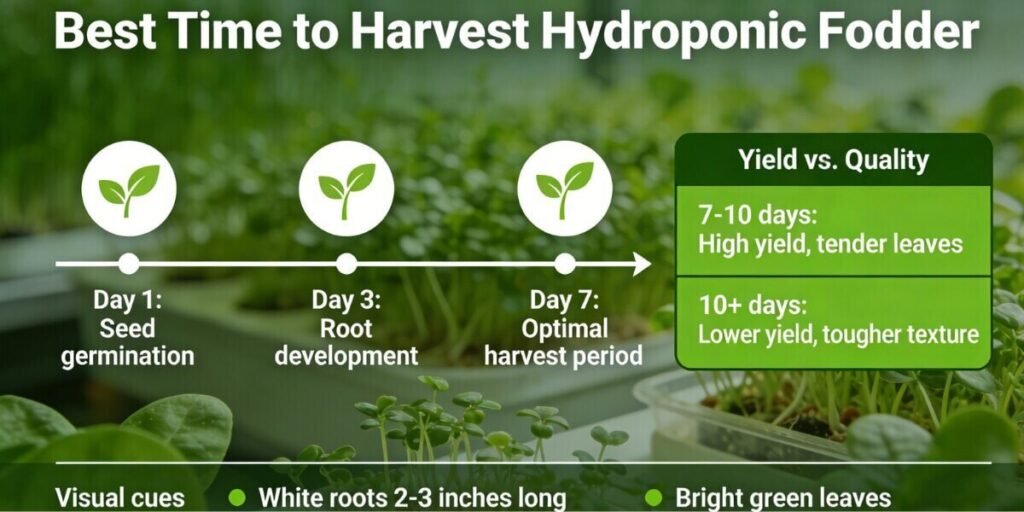

Time to Harvest Hydroponic Fodder is a question many livestock farmers face. Harvesting at just the right moment can make a big difference because fodder at its peak is more nutritious, easier to digest, and more efficient as feed. Hydroponic fodder has become a favorite on many farms because it grows quickly, stays consistent, and contains more nutrients than traditional feed. It is also a reliable way to lower feed costs while keeping daily rations steady for cattle, sheep, and poultry.
Yet surprisingly, many growers still struggle with timing. Cutting too early means the plants have not reached full nutrition, while waiting too long allows fiber to build up, making it less palatable. Learning the best harvest window is key for healthy animals and getting the most out of your feed.
In this guide, we will walk through the main growth stages of hydroponic fodder, show you how to spot when it is at peak nutrition, and provide practical tips for harvesting at the perfect time. By looking at how nutrients build over a typical 7-day growth cycle, you will know exactly when your fodder is ready to feed your livestock.
Hydroponic Fodder Growth Cycle: From Germination to Maturity
Stage 1: Germination Phase (Day 1–3)
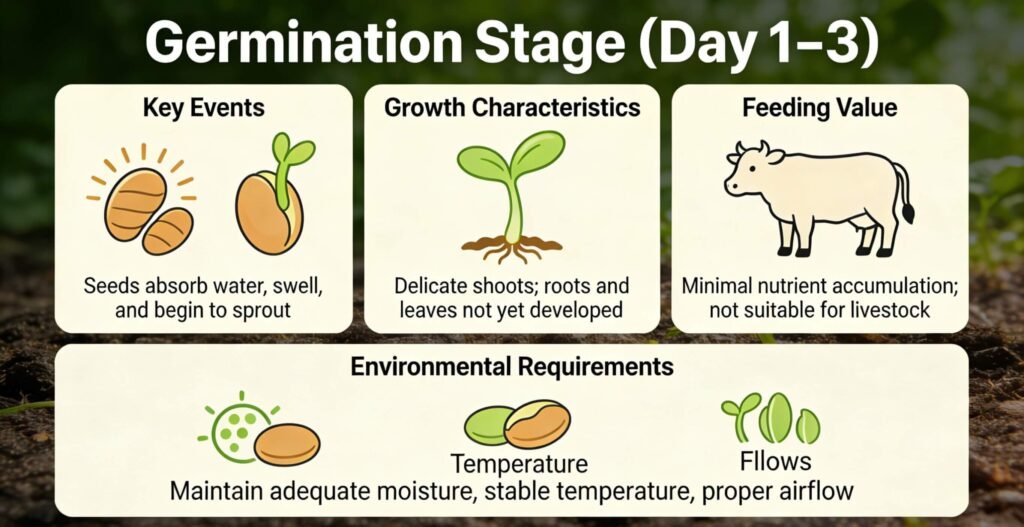
The germination stage is where hydroponic fodder growth begins. During this stage, seeds soak up water, swell, and start to sprout. Even though growth has started, the shoots are still very delicate, and the roots and leaves are not yet developed. At this point, nutrient levels are very low, so the fodder has little to no feeding value and is not ready for livestock.
The main goal during germination is to keep the seeds properly moist, maintain a stable temperature, and ensure good airflow. If conditions are poor, seeds can rot or develop mold, which affects sprouting and future nutrient accumulation. Watching the seeds swell and sprout is the best way to know if your batch is developing properly and ready to move on to the next stage.
Stage 2: Seedling Development (Day 4–6)
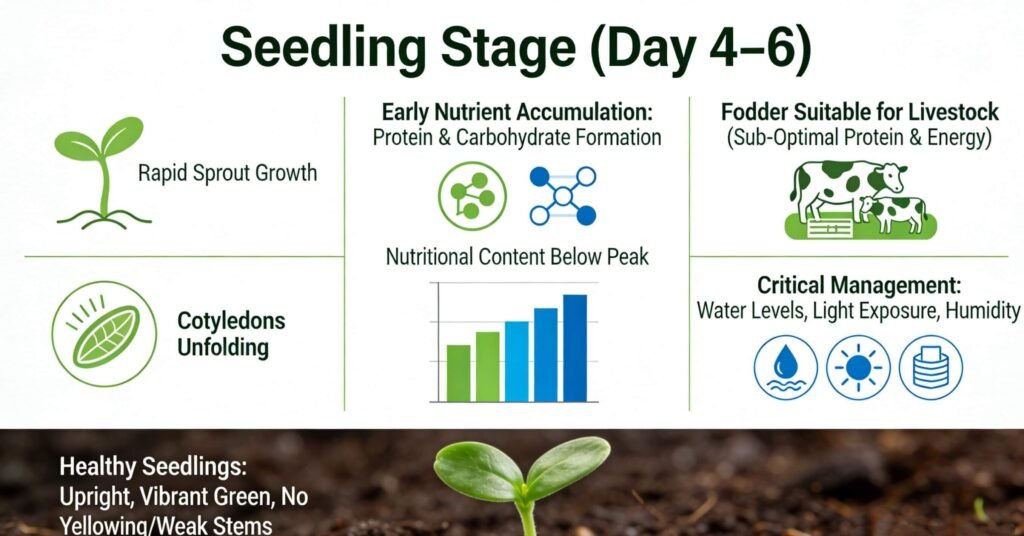
During the seedling stage, hydroponic fodder starts growing quickly and the cotyledons begin to unfold. This is when nutrient buildup really begins, with early protein and carbohydrates forming, though the overall nutrition is still below peak levels. The fodder can be fed to livestock at this point, but it is not yet fully packed with protein and energy.
At this stage, it’s important to keep an eye on water levels, light, and humidity to make sure growth is even. Healthy seedlings should stand upright, show a vibrant green color, and have strong stems without any yellowing or weakness. Setting up your seedlings this way lays a solid foundation for the next mature stage.
Stage 3: Mature Stage – Best Time to Cut Hydroponic Fodder (Day 7–10) ⭐
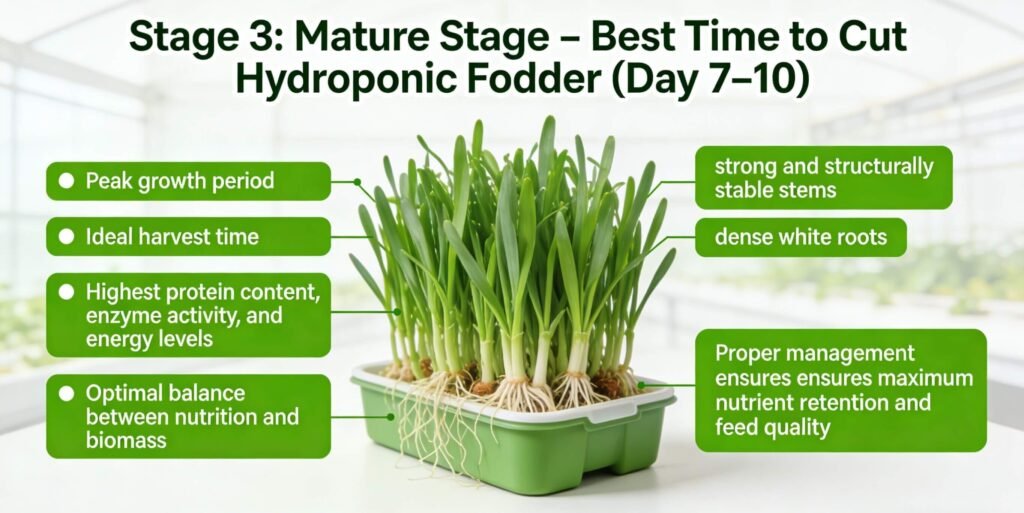
This is the peak growth stage for hydroponic fodder, when your plants are at their very best. The stems are strong, the roots are thick and white, and the fodder is full of protein, enzymes, and energy. It’s the perfect balance between nutrition and overall biomass.
To make the most of your harvest, keep a close eye on the stems, leaves, and roots. When the stems are sturdy, leaves are bright green, and roots look healthy, it’s time to cut. Harvesting at this stage ensures your livestock get the most nutritious and flavorful feed possible.
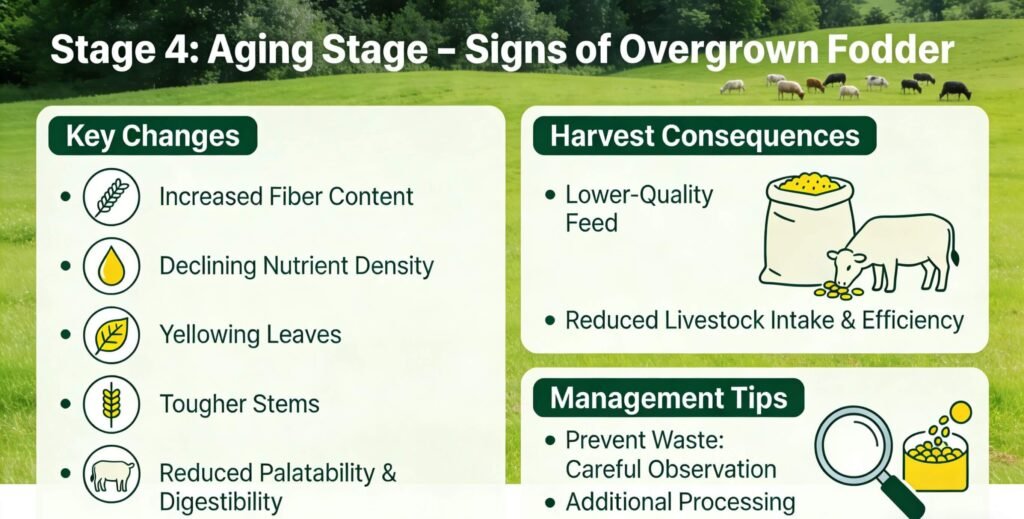
Stage 4: Aging Stage – Signs of Overgrown Fodder
Once hydroponic fodder reaches the aging stage, fiber levels go up while overall nutrient density drops. Leaves may start to yellow, stems get tougher, and the feed becomes less tasty and harder to digest. Cutting fodder after this point usually results in lower-quality feed, which can reduce how much your livestock eat and their overall efficiency.
At this stage, it’s important to keep a close eye on your fodder to avoid waste. Overgrown plants may not be appealing to animals and might need extra processing or mixing with fresh fodder before feeding.
How to Identify When Hydroponic Fodder Is Ready for Harvest
Morphological Signs of Mature and Healthy Fodder
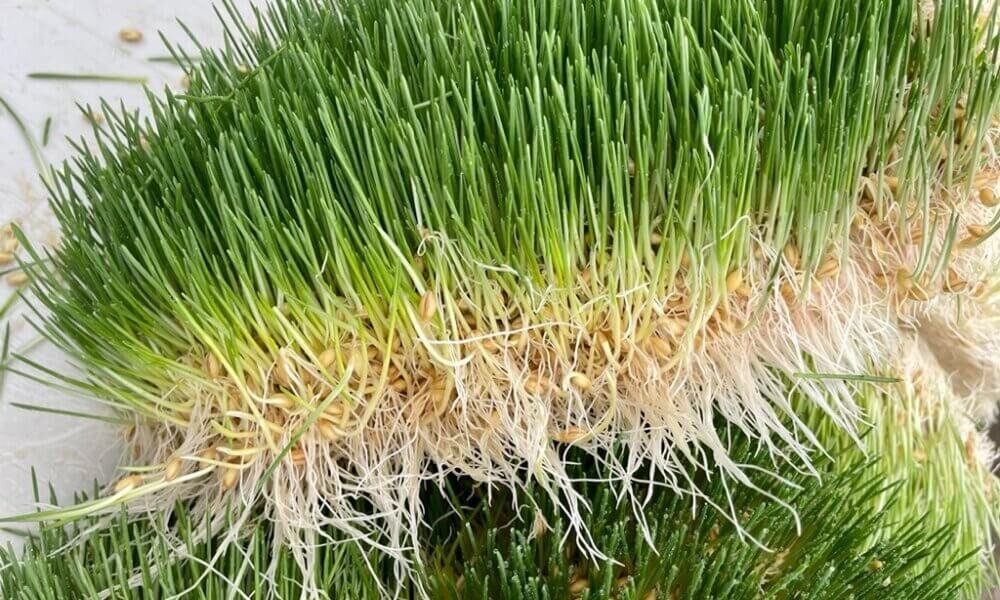
When it comes to harvesting hydroponic fodder, there are a few visual cues that can help you know if your plants are ready. Ideally, your fodder should be between 8 and 12 centimeters tall. The stems should be strong, upright, and even, without bending or falling over, so the plants can support maximum biomass and retain their nutrients.
The leaves are just as important. They should be fully open and a bright, vibrant green, with no yellowing, wilting, or mold. Healthy leaves mean your plants are photosynthesizing well and packing in essential nutrients, which makes the fodder more appealing and tasty for your livestock.
Roots matter too. They should be thick, white, and free from any bad odor. Any black, slimy, or rotting roots need to be removed because they can lower feed quality and even harm your animals. A strong, dense root mat shows that your plants have absorbed plenty of water and nutrients, which directly impacts protein, sugar content, and overall digestibility.
By keeping an eye on these signs, you can harvest hydroponic fodder at just the right time, getting peak nutrition and the best feed efficiency. For a full guide on growing hydroponic fodder from start to finish, check our Hydroponic Fodder Guide.
Nutritional Indicators for Maximum Protein and Sugar Content
The nutritional makeup of hydroponic fodder is one of the most important things to consider when deciding the best time to harvest. During the mature stage, protein levels are at their highest, usually between 20 and 30 percent, which helps livestock grow quickly and stay productive. Moisture content is generally around 90 percent, and natural sugars build up as the plants sprout, giving the fodder a slightly sweet taste that animals really enjoy. Fiber stays low, usually under five percent, which makes the feed easier to digest and more efficient for your animals.
Effect of Crop Variety and Growing Conditions
Different hydroponic fodder crops grow on slightly different schedules. Common varieties like barley, wheat, maize, and alfalfa each have their own best harvest window.
The environment also plays a big role in how fast your fodder grows and how nutrients build up. Hydroponic fodder usually grows best at temperatures between 20 and 25 degrees Celsius, but seasonal changes can affect timing. In hot summer weather, plants may mature faster, so harvesting a day or two earlier can be helpful. In colder winter conditions, growth slows down, and you might need to wait an extra day or two to reach peak nutrition.
Livestock type is another factor to consider. Poultry tend to prefer younger, tender fodder, while cattle and sheep can handle slightly higher fiber without affecting how much they eat or how well they digest it. By keeping crop variety, temperature, season, and animal type in mind, you can adjust harvest timing to get the most nutritious and efficient feed from your hydroponic fodder.
Determining the Optimal Harvest Window for Hydroponic Fodder
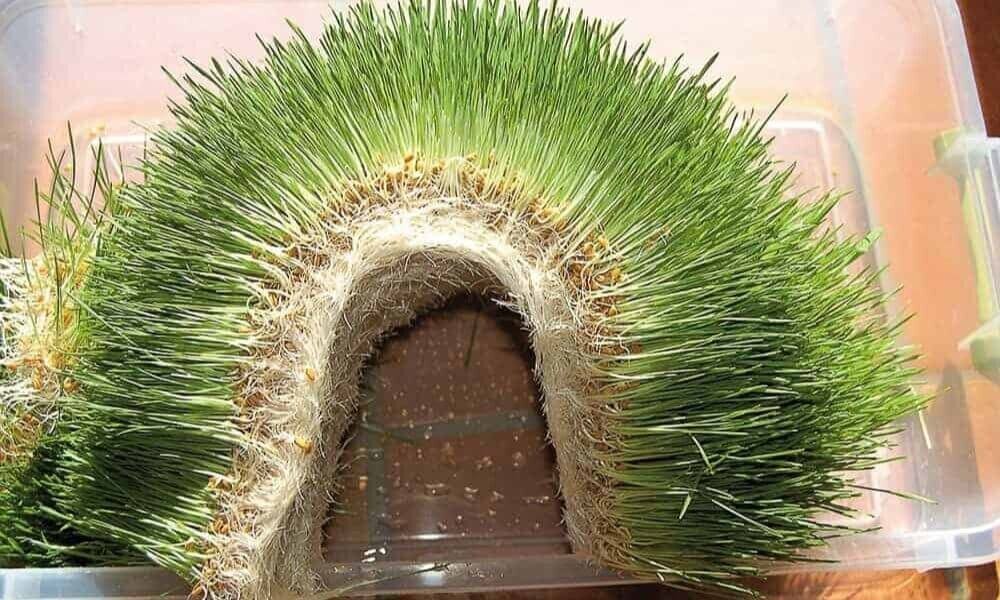
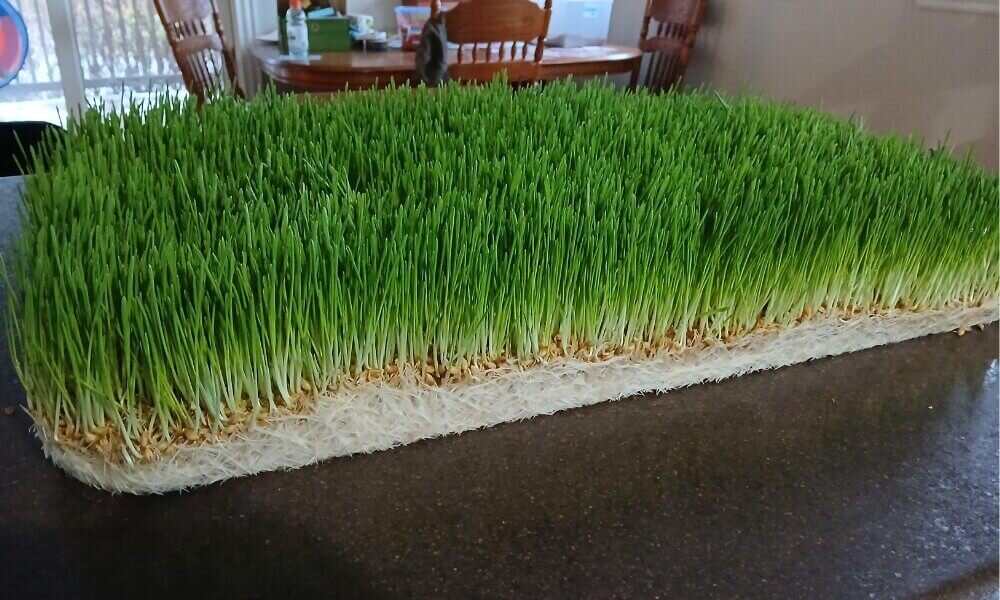
Most hydroponic fodder reaches its peak between day seven and day nine. At this stage, starches in the sprouts have partly turned into sugars, protein is at its highest, and fiber levels are still low. This combination gives you the perfect balance of nutrition, taste, and overall biomass, making it the best time to harvest for top feed quality and healthy, productive livestock.
By keeping an eye on growth indicators during this window, you can make sure you cut your hydroponic fodder at the right time. Doing so ensures your animals get feed that is highly digestible, tasty, and packed with nutrients.
Timing for Peak Nutrient Retention and Feed Quality
Harvesting hydroponic fodder too early means your sprouts haven’t grown tall enough or developed thick stems. At this stage, key nutrients like protein, sugars, and enzymes are still building up, so the feed doesn’t provide its full nutritional value. Giving early-harvested fodder to your livestock can lower feed efficiency and may not fully support growth or production.
On the other hand, waiting too long causes the fodder to become overmature. Fiber levels rise, stems get tougher, and leaves lose their tenderness. This makes the fodder less appealing, and animals might eat less or pick selectively. Digestibility drops as well, which reduces overall feed conversion efficiency. Even though late-harvested fodder still contains some energy, much of its nutritional benefit is lost compared with harvesting at the right time.
Getting the timing right is key to maximizing both nutrients and biomass. By cutting your hydroponic fodder at the optimal window, you ensure your livestock get feed that is highly digestible, tasty, and efficient for growth, milk production, or overall performance.
Recommended Cutting Schedule for Dairy, Beef, and Poultry
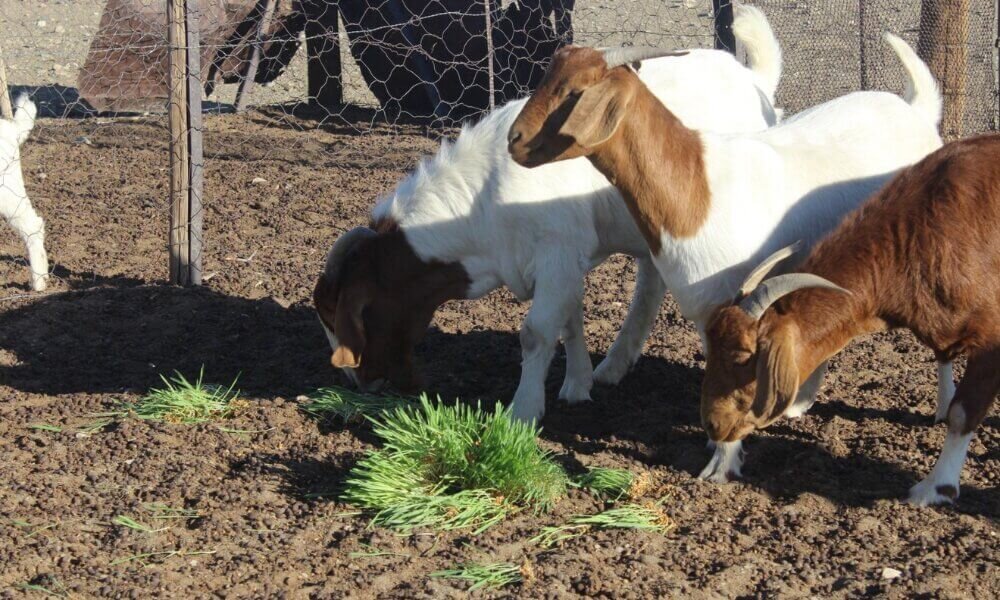
The optimal harvest day for hydroponic fodder can vary depending on the type of livestock, their digestive capacity, and feed preferences. While most fodder reaches its peak nutritional value between day 7 and day 9, slight adjustments can improve palatability and feed efficiency for different animals.
| Livestock Type | Recommended Harvest Day | Notes / Reason |
|---|---|---|
| Dairy Cows | Day 8–9 | Supports optimal milk production and maximizes nutrient intake |
| Beef Cattle | Day 9–10 | Acceptable later harvest due to higher fiber tolerance |
| Sheep & Goats | Day 7–8 | Provides tender fodder with best palatability |
| Poultry & Small Animals | Day 6–7 | Younger, softer fodder improves digestibility and feed intake |
For example, dairy cows benefit from slightly older fodder that is fully matured, while poultry and small animals perform better with younger, more tender sprouts. Adjusting harvest timing based on the target livestock ensures maximum nutrition, feed conversion, and overall animal performance.
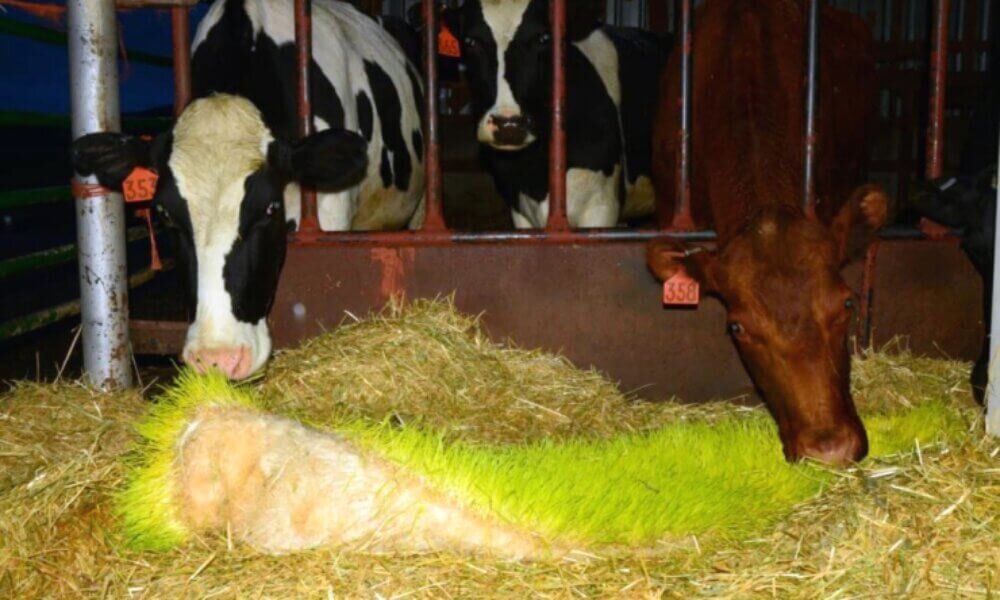

Step-by-Step Guide to Harvesting Hydroponic Fodder
Proper harvesting is key to getting the most nutrition, taste, and feed efficiency from your hydroponic fodder. Follow these simple steps to make sure your livestock get the best possible feed.
1. Stop Irrigation 1–2 Hours Before Harvest
Stopping watering shortly before harvesting your hydroponic fodder helps any extra moisture drain from the trays. This keeps the roots from getting waterlogged, lowers the chance of nutrient loss, and makes the plants much easier to handle. Managing moisture properly at this stage also helps prevent mold or rot while you’re working with the fodder.
2. Use a Cutting Method Instead of Pulling
Always cut your hydroponic fodder at the base using scissors or a sharp blade. Avoid pulling or tugging the plants, because this can damage the stems and roots, leading to nutrient loss, a collapsed fodder mat, and lower overall feed quality. Cutting carefully helps preserve both the biomass and the nutritional value of your fodder.
3. Clean Roots Thoroughly if Feeding Entire Plant
If you plan to feed the whole hydroponic fodder plant, roots and all, make sure to rinse the roots thoroughly to get rid of any leftover substrate or debris. Dirty roots can introduce contaminants or pathogens, which lowers feed safety. Cleaning the roots properly also helps keep your fodder fresh and ensures your livestock get high-quality, easily digestible feed.
4. Feed Fresh Fodder Whenever Possible
Try to keep storage time as short as possible to preserve the peak nutritional value of your hydroponic fodder. Freshly harvested fodder has the highest levels of protein, sugars, and enzymes, which makes it more palatable and easier for your livestock to digest. If you do need to store it, keep the fodder in a cool, shaded spot or refrigerate it to slow down nutrient loss and prevent spoilage.
5. Additional Tips for Maintaining Feed Quality
- Handle your hydroponic fodder gently while harvesting to avoid bruising the leaves and stems.
- Don’t leave cut fodder out in direct sunlight, because the heat can break down nutrients and lower feed quality.
- Try to harvest around the same time each day. Early morning or late afternoon is usually best, as it helps keep moisture and sugar levels at their peak, giving your livestock the most nutritious feed possible.
By following these detailed steps, growers can ensure that hydroponic fodder is harvested at its nutritional peak, improving feed efficiency and overall livestock performance.
5 Common Harvesting Mistakes That Reduce Fodder Quality
Proper harvesting is key to keeping your hydroponic fodder at its peak in nutrition, taste, and feed efficiency. Watch out for these common mistakes to make sure your feed stays high-quality and delivers the best value for your livestock.
1. Letting Fodder Grow Beyond Peak Stage
Overgrown hydroponic fodder is pretty easy to spot. The stems get thick and fibrous, leaves may start turning yellow, and the plants often grow taller than 12 centimeters. It might seem like letting them grow longer would give you more feed, but overgrown fodder actually has more fiber, is harder to digest, and tastes less appealing to your animals. As a result, livestock may eat less, which lowers feed conversion efficiency.
Practical tip: keep a close eye on the growth cycle and harvest within the optimal window, usually between day 7 and day 9, depending on the crop and type of livestock. Harvesting at the right time ensures your hydroponic fodder keeps maximum nutrients while staying tender, tasty, and easy to digest.
2. Harvesting Before Nutrients Fully Develop
Hydroponic fodder harvested too early usually looks short, with thin stems, small leaves, and underdeveloped roots. At this stage, protein, sugars, and enzymes haven’t fully built up, so the fodder has low biomass and limited nutritional value. Feeding early-harvested fodder can reduce livestock performance and overall efficiency.
Practical tip: wait until your plants reach 8–12 centimeters in height, the leaves are fully unfolded, and the roots are dense and white. Harvesting at this stage ensures your hydroponic fodder has reached its full nutritional potential and will give your animals the best feed.
3. Pulling Instead of Cutting with a Sharp Blade
Forcing hydroponic fodder out of the tray can damage stems and roots, which leads to nutrient loss and a collapsed mat. This lowers both the feed quality and the total amount of usable biomass.
Practical tip: always cut your fodder at the base using a sharp blade or scissors. Handle the mat gently to keep stems and roots intact, making sure your livestock get high-quality, undamaged fodder every time.
4. Not Rinsing Roots Properly
Feeding the whole hydroponic fodder plant without properly cleaning the roots can leave behind substrate, dust, or even pathogens. Dirty roots lower feed safety, reduce palatability, and could pose health risks to your livestock.
Practical tip: if you’re feeding the entire plant, rinse the roots thoroughly with clean water to remove all leftover substrate and debris. Keeping the roots clean helps preserve feed quality and keeps your animals healthy.
5. Leaving Fodder Stored Too Long
Leaving harvested hydroponic fodder out or piled up for too long can lead to mold, nutrient loss, and moisture evaporation. Wilting or discolored fodder means lower protein, sugars, and enzymes, which makes it less digestible and less appealing to your livestock.
Practical tip: feed your fodder fresh whenever possible. If you need to store it, keep it in a cool, shaded spot or refrigerate it to slow down nutrient loss and prevent spoilage. Keeping storage time short helps preserve peak nutrition and supports the best performance from your animals.
FAQ: Best Practices for Hydroponic Fodder Harvest
Freshly harvested fodder is best fed immediately to livestock. At room temperature, it can be kept for 1–2 days, while refrigeration at 4–8°C extends storage to 3–5 days. Minimizing storage time ensures maximum protein, sugar, and enzyme retention.
Yes, but its nutritional value may have declined. For older fodder, chop it finely and mix with fresh fodder to improve digestibility and palatability. Fodder that is severely aged, yellowed, or moldy should be discarded to protect animal health.
Hydroponic fodder often grows at different rates within the same tray. The best approach is to harvest in stages, collecting the mature portion first and allowing smaller or slower-growing plants to continue developing for 1–2 more days. This ensures each portion reaches its nutritional peak.
Yes, seasonal temperature variations affect growth rates. In hot summer conditions, fodder matures faster, so harvesting may need to be advanced by 1–2 days. In colder winter months, growth slows, requiring a delay of 1–2 days. Always monitor environmental conditions such as temperature, humidity, and light to maintain optimal growth.
Healthy, white roots are safe and can provide additional fiber. However, any roots that are blackened, slimy, or rotting must be removed to avoid contamination and health risks. Proper washing is essential if feeding roots with the plant.
Maximizing Feed Quality with Proper Harvest Timing
The best time to harvest hydroponic fodder is during the mature stage, usually between day 7 and day 10. Keep an eye on the plants’ appearance, track key nutritional indicators, and adjust based on the crop type and growing conditions. This way, you’ll get fodder packed with protein, natural sugars, and easy-to-digest nutrients.
Remember, fresh and healthy fodder is far more valuable than letting it grow too long. Harvesting on time helps preserve peak nutrition, improves feed efficiency, and supports better performance from your livestock.
Improve Livestock Performance with Timely Fodder Harvest
Check your hydroponic fodder against the signs in this guide to see if it is ready for harvest. We would love to hear from you. Share the types of crops you are growing and the livestock you feed in the comments. Your experiences can help other farmers get better results too.
Save this blog and follow us for more practical tips and insights on hydroponic fodder and livestock care. Share it with fellow farmers so they can avoid common mistakes and make the most of their fodder.
Whether you have a small dairy farm or a large livestock operation, our team can help you design a system that fits your space, climate, and feeding goals. Contact Greenfuturehydro today for a custom hydroponic fodder solution
📩 info@greenfuturehydro.com
📞 +86 13487543942
📷 Instagram @Greenfuturehydro
Follow us on Instagram for hands-on hydroponic growing tips, fodder production guidance, and practical livestock feeding advice.

