
Hydroponic Fodder Nutritious is a question more and more livestock farmers are asking as feed costs rise and weather becomes less predictable. Everyone wants to know whether their animals are truly getting the nutrition they need to stay healthy and productive. Hay, silage, and grain are still the backbone of most feeding programs, but their quality and digestibility are not always as reliable as we would like.
At the same time, hydroponic fodder is gaining attention as a way to grow fresh green feed directly on the farm. By using only water and light to sprout grains, farmers can harvest young, living plants in just a few days. That naturally leads to an important question: is hydroponic fodder really more nutritious than traditional feed, or does it just look greener?
Why Feed Nutrition Matters on Today’s Farms
For farmers and livestock nutritionists alike, getting feed right has never been more important. Weather extremes like droughts and heat waves, along with rising transport costs, make it harder to get consistent hay and grain. Even when you manage to stock up, long storage can quietly sap vitamins and allow mold to develop, which means your animals might not be getting the nutrition they actually need. In other words, feed quality isn’t just about what goes into the trough,it’s about what your livestock can really absorb to stay healthy and productive.
Why Farmers Are Looking Beyond Hay and Grain
Many farmers are starting to take a closer look at hydroponic fodder because it gives them more control over the quality of what they feed their animals. By sprouting barley, wheat, or oats in a clean, soilless system, they can grow fresh green feed in just 7 to 10 days, no matter the weather outside.
From a nutrition perspective, this is a game changer. The young sprouts are full of moisture, enzymes, and easily digestible nutrients, which makes feed quality more predictable for livestock. From a farmer’s point of view, it also reduces the usual headaches from vitamin loss, mold, or storage issues that come with hay and grain. That’s why hydroponic fodder is now being seriously considered alongside traditional feeds in modern feeding programs.
What Hydroponic Fodder Is and How It Is Grown
Hydroponic fodder is basically grains that are allowed to sprout into fresh, tender shoots before being fed to animals. On most farms, barley, wheat, oats, or corn are used. Instead of planting them in soil, the seeds are placed in trays where they get only water, light, and air. Within 7 to 10 days, the grains grow into a soft mat of green shoots with a white root base that animals can eat entirely. From both a practical and nutritional perspective, this early growth stage makes a big difference. The plants are still young and moist, so livestock can easily chew and digest them, and because both the shoots and roots are edible, nothing is wasted.
For farmers, using a hydroponic fodder system ensures a consistent, high-quality supply of feed every day, regardless of the weather outside. If you want to see how this process works step by step on a real farm, you can also check our 7-day fodder guide, which shows exactly how farmers produce fresh, digestible feed using simple hydroponic systems.
What Counts as Traditional Livestock Feed
On most farms, animal diets are built around three basic types of feed, and every livestock farmer knows the strengths and weaknesses of each.
Hay is what most people think of first. Whether it’s alfalfa, timothy, or other grasses, hay provides the rough fiber that keeps a cow’s rumen working properly and prevents digestive problems. When hay is good, animals eat well and stay healthy. When it’s dusty, over-dry, or poorly stored, intake drops and so does performance.
Silage is another major feed, especially on dairy farms. It’s made from chopped forage that’s packed and fermented, which locks in energy and makes it more palatable. Good silage can really boost milk and weight gain, but anyone who has opened a spoiled bunker knows how risky it can be. One small mistake in packing or sealing can turn valuable feed into waste.
Grains and commercial concentrates are used to push production more milk, faster growth, better body condition. They work, but they are also the most expensive part of the ration. If storage is poor or the feed sits too long, nutrients slowly break down, meaning you end up paying for energy and protein your animals never actually get.
Where Traditional Feed Loses Nutritional Value
Traditional feed is still widely used, but in real farm conditions it comes with some important nutritional drawbacks.
One of the most common issues is vitamin loss during storage. Hay and grains naturally contain vitamins like A, E, and B, but these nutrients slowly break down when feed is exposed to heat, light, and oxygen. So even if the feed started out nutritious, a significant portion of those vitamins may be gone by the time it is actually fed to animals.
Mold and mycotoxins are another serious concern. When hay or silage is not dried, stored, or sealed properly, fungi can grow. These molds can produce toxins that affect animal health, reproduction, and feed intake, which is why feed quality matters just as much as feed quantity.
Digestibility is also a key issue. Dry forage and mature grains are harder for animals to break down in the gut. This means that not all of the protein and energy in traditional feed is fully absorbed. Compared to soft, young sprouts like hydroponic fodder, a larger share of those nutrients simply passes through unused.
What Happens to Nutrients When Grain Starts to Sprout
When a grain seed begins to sprout, it is no longer a storage food. It becomes a living plant. During this sprouting process, the seed undergoes a series of biochemical changes that directly improve nutrient bioavailability and digestibility for livestock.


How Sprouting Increases Nutrient Availability
| Nutrient Change | What Happens in Sprouting | Why It Matters for Livestock |
|---|---|---|
| Starch → Sugar | Stored starch is converted into simple sugars | Easier energy digestion and less digestive stress |
| Protein → Amino acids | Complex proteins are broken down | Higher protein availability and absorption |
| Phytic acid reduced | Bound minerals are released | More calcium, phosphorus, zinc become usable |
| Vitamins increase | Vitamins A, B, C and E rise | Stronger immunity and metabolic function |
| Enzymes activated | Natural digestive enzymes are produced | Improved feed efficiency and gut health |
These changes explain why sprouted grain feed provides more usable nutrition than dry grain or mature forage. Even though the dry matter of a seed decreases slightly during germination, the proportion of nutrients that animals can actually absorb increases significantly due to higher enzyme activity and improved nutrient bioavailability.
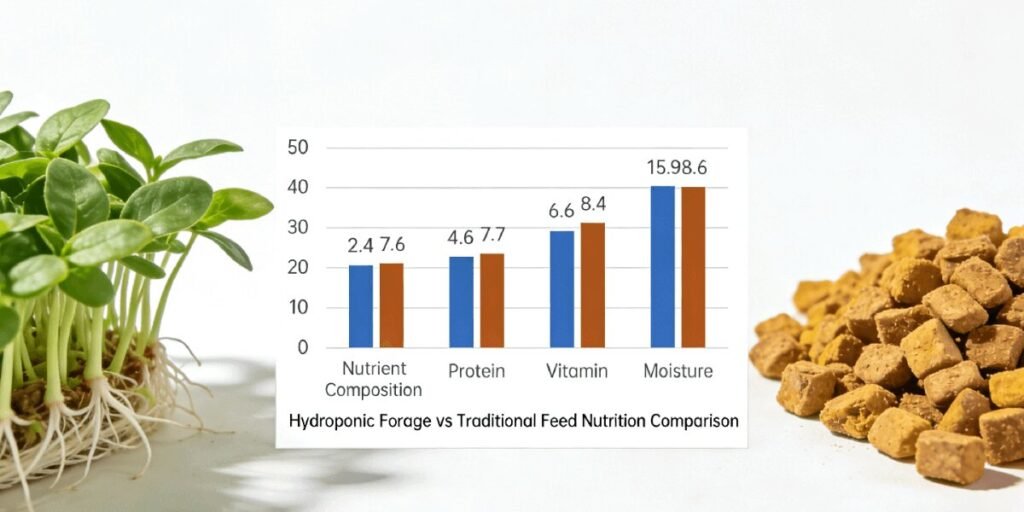
Hydroponic Fodder vs Traditional Feed A Nutritional Comparison
| Factor | Hydroponic Fodder | Traditional Feed |
|---|---|---|
| Moisture | High, fresh and juicy | Low, dry |
| Enzyme content | Very high from active sprouts | Almost none |
| Protein quality | Highly digestible amino acids | Variable and often harder to digest |
| Fiber structure | Soft and young plant fiber | Often coarse and mature |
| Vitamin levels | Fresh and biologically active | Gradually lost during storage |
| Mineral absorption | High due to reduced phytates | Limited by phytic acid |
This comparison shows why hydro hydroponic fodder provides more usable nutrition than traditional dry feed, even when total dry matter appears similar.
Why Hydroponic Fodder Delivers More Usable Nutrition
The key reason hydroponic fodder is considered more nutritious is not because it contains more total nutrients, but because it delivers higher nutrient availability and digestibility. During the sprouting process, complex starches and proteins in the grain are converted into simpler forms that livestock can absorb more easily. This allows animals to extract more usable energy, protein, and minerals from every kilogram of feed.
How digestibility reaches 80 to 90 percent
One of the biggest differences between hydroponic fodder and traditional feed is how much of it animals can actually digest. Young sprouts are soft, moist, and biologically active. Unlike dry hay or hard grain, they do not require heavy fermentation or long breakdown inside the rumen. Because the plant tissues are still young and rich in enzymes and simple sugars, livestock can access the nutrients much more easily, which is why digestibility often reaches 80 to 90 percent in real feeding systems.
Why animals absorb more from fresh sprouts
Traditional feed may contain protein and minerals, but much of it is locked inside tough fibers or bound by compounds such as phytic acid. Sprouted grain feed works differently. During germination, those barriers are broken down, releasing amino acids and minerals into forms the animal can absorb. This means a cow or goat is not just eating protein on paper, but actually absorbing and using more of it inside the body.
How less feed can produce the same results
When digestion and absorption improve, something important happens at the farm level. Animals simply need less feed to achieve the same milk production, weight gain, or body condition. More of what they eat becomes usable energy and building material instead of ending up as waste. Over time, this leads to better feed efficiency, healthier animals, and lower overall feeding costs compared with relying only on dry hay and grain.
How Hydroponic Fodder Affects Milk Meat and Animal Health
When hydroponic fodder becomes part of a feeding program, farmers usually notice more than just greener feed. What really changes is how efficiently animals use what they eat. Because sprouted fodder is easier to digest, a much higher percentage of nutrients is converted into milk, meat, and body condition instead of being lost as waste.


Milk yield and milk fat in dairy cows
When hydroponic fodder is added to a dairy cow’s diet, farmers often notice more than just greener feed. The real difference shows up in milk performance. Because sprouted fodder is easier to digest, a larger share of nutrients is converted into milk instead of being lost in manure. The natural enzymes and high moisture content of hydroponic fodder support healthy rumen fermentation, helping stabilize feed intake and maintain consistent milk yield. Many dairy herds also see more stable milk fat levels, which reflects better fiber digestion and a healthier rumen environment.
Rumen health in sheep and goats
For sheep and goats, hydroponic fodder creates a more balanced and efficient digestive system. The tender sprouts encourage chewing and saliva production, which helps regulate rumen pH and supports beneficial microbes. This improves fiber breakdown and nutrient absorption, allowing animals to maintain better body condition, especially during lactation or when pasture quality is low. A healthier rumen means fewer digestive upsets and more efficient use of every kilogram of feed.
Feed conversion and growth in poultry
In poultry production, hydroponic fodder contributes to better feed conversion and faster, more uniform growth. Fresh green sprouts and active enzymes improve gut health, allowing chickens and other poultry to absorb more protein, energy, and vitamins from the same amount of feed. Many farmers report improved growth rates, stronger eggshells, and reduced feed waste when sprouted grain feed is included alongside traditional rations.
Fewer digestive problems and lower vet costs
Across all types of livestock, one of the most important benefits of hydroponic fodder is improved digestive stability. Animals fed sprouted fodder experience fewer issues such as diarrhea, bloating, and feed refusal. With nutrients being absorbed more efficiently, overall health improves and the risk of digestive disorders decreases. This leads to lower veterinary costs, better animal welfare, and higher long-term productivity, making hydroponic fodder a powerful tool for improving livestock feed efficiency. Better digestion and higher nutrient absorption also support animal immunity. You can learn more in our article on how hydroponic fodder supports animal immunity.
The Real Cost of Feed Versus the Cost of Nutrition
| Cost and Nutrition Factor | Hydroponic Fodder | Traditional Hay and Grain |
|---|---|---|
| Water use | Very low, recycled in a closed system | High due to irrigation and field losses |
| Storage losses | None, fed fresh every day | High due to mold, spoilage, and oxidation |
| Transportation cost | Grown on site | Expensive to ship bulky dry feed |
| Nutrient stability | Fresh and biologically active | Vitamins decline during storage |
| Digestibility | 80 to 90 percent | Often 40 to 60 percent |
| Feed waste | Very low | High due to poor intake and spoilage |
| Cost per usable nutrient | Low | High |
Why Hydroponic Fodder Often Lowers Cost per Absorbed Nutrient
Even if hydroponic fodder sometimes costs more per kilogram to produce, it delivers far more absorbable nutrition. Because digestibility is higher and storage losses are almost zero, farmers get more usable protein, energy, and minerals from every unit of feed. With traditional hay and grain, a large portion of nutrients is lost to mold, oxidation, poor digestion, and waste before the animal can ever use it.
In practical farm economics, what matters is not the price of feed, but the cost per unit of nutrition actually absorbed by the animal. When viewed this way, hydroponic fodder consistently outperforms traditional feed systems, especially in regions with high transport costs, drought, or feed quality problems.
When Hydroponic Fodder Works Best on a Farm
Hydroponic fodder is not a universal replacement for all types of feed, but in the right conditions, it can dramatically improve feed efficiency and farm economics.


When Hydroponic Fodder Works Best
Hydroponic fodder delivers the greatest value in dry and drought-prone regions where growing pasture or producing hay is difficult or expensive. Because it uses very little water and does not depend on soil or weather, farmers can produce fresh green feed every day even in arid climates.
It is also especially effective for dairy cows, beef cattle in finishing stages, and breeding stock. These animals have high nutritional demands, and the high digestibility of sprouted grain feed helps convert more feed into milk, meat, and reproductive performance. When nutrient absorption improves, animals gain more benefit from the same amount of feed.
Hydroponic fodder is most profitable on farms where traditional feed costs are high or unstable. If hay and grain must be transported long distances or suffer frequent quality losses, growing fodder on site can significantly reduce the cost per unit of usable nutrition.
When Hydroponic Fodder Should Not Be Used Alone
Although hydroponic fodder is highly nutritious, it should not be used as the only feed source for ruminant animals. Cattle, sheep, and goats still require long-fiber roughage such as hay or straw to maintain proper rumen function and chewing activity. Without enough structural fiber, animals may experience reduced rumination and digestive imbalance.
For this reason, hydroponic fodder works best as a supplement to traditional forage, not a complete replacement. When combined correctly, it improves overall feed efficiency, stabilizes digestion, and enhances animal performance while preserving rumen health.
Farmers Also Ask About Hydroponic Fodder
Hydroponic fodder is not a replacement for hay, but it provides fresher and more digestible nutrients. While hay supplies fiber for rumen function, hydroponic fodder adds enzymes, vitamins, and easily absorbed energy, making the overall diet more efficient and balanced.
Hydroponic fodder cannot fully replace dry feed or roughage. Ruminant animals still need fiber from hay or straw for proper digestion. However, hydroponic fodder can replace a large portion of grain and green feed, improving nutrient absorption and reducing feed waste.
In many cases, yes. Because hydroponic fodder is easier to digest, cows absorb more usable energy and protein from each kilogram of feed. This often leads to more stable milk production, improved milk fat levels, and fewer digestive issues that limit performance.
Hydroponic fodder contains natural plant moisture that helps deliver enzymes, sugars, and minerals into the digestive system. This water is part of the living plant tissue and improves digestion and feed intake, rather than diluting the nutritional value.
Most hydroponic fodder systems produce harvestable feed in about 7 to 10 days. Grains such as barley, wheat, oats, and corn quickly sprout into a thick mat of green shoots and roots that can be fed directly to livestock.
So Is Hydroponic Fodder Really More Nutritious
Hydroponic fodder is not a replacement for traditional feed. It is a nutritional amplifier that delivers fresher, more digestible, enzyme-rich nutrients to livestock. By turning dry grain into living sprouts, it improves nutrient availability, supports better digestion, and allows animals to extract more usable energy, protein, and minerals from every bite.
When combined with traditional roughage such as hay or straw, hydroponic fodder helps create a more balanced, efficient, and stable feeding system. The result is healthier animals, better feed conversion, and more predictable performance in milk, meat, and overall herd condition.
Want to Grow Your Own Fresh Fodder
If you want a full step-by-step reference, you can also check out our complete growing guide for hydroponic fodder.
Want to grow your own fresh fodder? If you are looking for a reliable way to produce high-quality livestock feed, Greenfuturehydro can help. We provide complete hydroponic fodder systems for farms, schools, and commercial livestock operations, including LED grow lights, trays, racks, and nutrient solutions.
Whether you run a small dairy farm or a large livestock operation, our team can help you build a system that fits your space, climate, and feeding goals.
Contact Greenfuturehydro today for your custom hydroponic fodder solution.
📩 info@greenfuturehydro.com
📞 +86 13487543942
📷 Instagram @Greenfuturehydro
Follow us on Instagram for practical hydroponic growing and fodder production tips.
More Articles You May Find Useful
- How Hydroponic Fodder Supports Animal Immunity
- Active Nutritional Benefits of Hydroponic Fodder
- Hydroponic Gardening for Sustainable Living
- Hydroponics for Kids: A Fun and Easy Way to Learn
- How to Control Pests in Hydroponics


