
What is hydroponics? Hydroponics is a way of growing plants without soil by delivering water, oxygen, and essential nutrients directly to the roots. Instead of depending on soil, plants grow in a carefully managed environment where their basic needs can be controlled.
From small indoor gardens to commercial farms, hydroponics allows growers to produce fresh plants in many different spaces. In this beginner’s guide, you’ll learn how hydroponics works, the main types of systems, their benefits and challenges, and how to choose the right approach for your growing goals.
What Is Hydroponics?
When most people think about growing plants, they usually think of soil. But soil is not actually what plants eat. What plants really need are water, nutrients, oxygen, and the right growing conditions around their roots.
Hydroponics is a method of growing plants without traditional soil. Instead of searching through soil for nutrients, plant roots receive a carefully balanced nutrient solution directly from water. Some systems keep roots in water, while others use materials like coco coir, rockwool, or clay pebbles to provide support and improve airflow around the roots.
The biggest difference is control. Because growers can manage water, nutrients, and the root environment more precisely, hydroponics makes it possible to grow plants in places where traditional gardening may be difficult. From a small indoor herb garden to large commercial greenhouses, hydroponic growing is now used by gardeners and farmers around the world.
How Does Hydroponics Work?
The easiest way to understand hydroponics is to think about what plants actually need from soil. Soil itself is not the food source for plants. Its main job is to hold the roots in place and store water and nutrients. Hydroponic systems simply provide those same things in a more direct and controlled way.
Instead of sending roots through soil to find nutrients, hydroponics delivers a nutrient solution straight to the root zone. The water carries essential minerals to the roots, while oxygen helps them absorb those nutrients and stay healthy. This balance between water, nutrients, and oxygen is what allows plants to grow successfully without traditional soil.
Some systems grow plants with their roots sitting in water, while others use materials like coco coir, rockwool, or clay pebbles to support the plant. These growing media do not feed the plant; they simply create a stable environment where roots can access moisture and air.
Different hydroponic systems use different methods to deliver nutrients, but the goal is always the same: create the best possible environment for roots. When roots have the right combination of water, nutrients, and oxygen, plants can focus their energy on healthy growth.
Why Can Plants Grow Without Soil?
For thousands of years, people have grown plants in soil, so it is easy to assume that soil is something plants cannot live without. But the truth is a little different. Plants do not absorb “food” from soil itself. Their roots take in water and dissolved nutrients, while soil mainly provides a place for roots to grow and helps hold moisture around them.
Hydroponics works by replacing that role of soil. Instead of waiting for nutrients to move through the soil, growers deliver them directly to the root zone through water. Some systems use growing media like coco coir, rockwool, or clay pebbles, but these materials are only there to support the roots and help maintain moisture and airflow.
The biggest advantage is the level of control. Growers can adjust the growing conditions instead of depending on soil quality, weather, or other natural factors. That does not mean hydroponics is always better than soil gardening. Both methods work well when managed properly, but hydroponics gives growers another option when they want more control over how their plants grow.
Types of Hydroponic Systems
There is no single way to grow hydroponically. Some systems keep roots sitting in water, some let nutrient solution flow past the roots, and others deliver nutrients through drops or mist. The best system really depends on what you want to grow and how involved you want to be.
Deep Water Culture (DWC)
DWC is often the first system people try when they get interested in hydroponics. It is simple: the plant sits above a bucket or reservoir, while the roots grow directly into the nutrient solution below.
For beginners, this setup is attractive because there are not many parts to deal with. Add an air pump, keep the water balanced, and plants like lettuce, basil, and other leafy greens can grow very well. The thing to remember is that the roots are always in the same water, so a dirty reservoir can quickly become a problem.
Nutrient Film Technique (NFT)
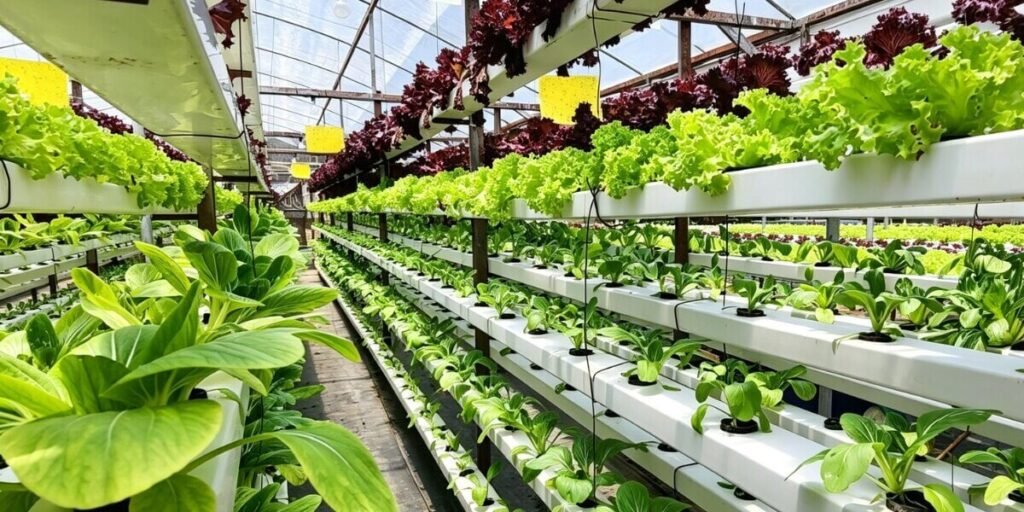
NFT works by letting a thin stream of nutrient solution flow through a channel where the roots sit. The roots are not completely underwater, which allows them to get both nutrients and oxygen at the same time.
This is one reason NFT is so common in commercial lettuce production. Growers can arrange many channels in a relatively small area and produce a large number of plants efficiently. The trade-off is that the system relies on continuous water flow, so pump problems need to be noticed quickly.
Ebb and Flow (Flood and Drain)
Ebb and Flow takes a different approach. Instead of constantly feeding the roots, the system floods the growing tray for a short time and then drains the solution back into the reservoir.
Many growers like this method because it creates a natural wet and dry cycle. Roots get moisture when they need it and fresh air when the tray drains. It is a flexible system, although it does require a timer and a little more setup.
Drip Hydroponic System
If you have ever seen a garden irrigation system, drip hydroponics will probably look familiar. Small tubes deliver nutrient solution directly to each plant, giving growers control over how much water each crop receives.
This method is especially useful for larger plants such as tomatoes, cucumbers, and peppers. It is popular in greenhouses because each plant can be managed individually, but setting up the system usually takes more planning than a simple DWC setup.
Aeroponics
Aeroponics is one of the more advanced hydroponic methods. Instead of sitting in water or growing media, the roots hang in the air and are sprayed with a fine nutrient mist.
When it works well, the results can be impressive because roots receive plenty of oxygen. However, it is also less forgiving. Spray nozzles, pumps, and timing all need to work properly, which is why aeroponics is usually better suited for experienced growers.
The “best” hydroponic system is really the one that matches your situation. A person growing a few herbs on a balcony will have completely different needs from a farm producing thousands of heads of lettuce. Start with the system that fits your goals, not the one that sounds the most advanced.
Benefits of Hydroponic Growing
One of the biggest reasons people choose hydroponics is the level of control it gives them. Instead of dealing with unknown soil conditions, growers can decide exactly what their plants receive, from nutrient levels to water quality. For many gardeners, this makes it easier to understand what their plants need and solve problems when something goes wrong.
Hydroponics also makes growing possible in places where traditional gardening is difficult. A small indoor corner, apartment balcony, greenhouse, or vertical farm can all become productive growing spaces with the right setup. Many systems reuse water, reduce the need for weeding, and make it possible to grow fresh vegetables beyond the normal growing season.
Challenges of Hydroponic Growing
Hydroponics can make growing easier in many ways, but it is not a completely hands-off method. Unlike soil gardening, where soil can naturally buffer some changes, hydroponic systems require growers to pay closer attention to things like nutrient levels, water quality, and pH. A small imbalance in the system can quickly affect plant health, especially for beginners who are still learning how plants respond.
There is also a higher cost and learning curve at the beginning. Pumps, reservoirs, lighting, and other equipment require an upfront investment, and many systems depend on electricity to keep water and oxygen moving. The good news is that most problems can be avoided with regular checks and a basic understanding of how the system works. Once the routine becomes familiar, many growers find hydroponics much easier to manage than they expected.
Best Plants to Grow in Hydroponic Systems
One of the first questions many beginners ask is: “What plants can actually grow in hydroponics?” The answer is probably more than you expect. From simple kitchen herbs to larger fruiting plants, hydroponic systems can support many different types of crops as long as the plants receive the right amount of light, nutrients, and space.
Leafy greens such as lettuce, spinach, basil, and other herbs are usually the easiest place to start because they grow quickly and do not require much support. Once growers become more comfortable, they can move on to larger crops like tomatoes, cucumbers, peppers, and strawberries, which need stronger lighting, more room, and additional care.
Hydroponics is not limited to vegetables either. Many growers use these systems for edible plants, flowers, and ornamental crops. The key is choosing plants that match your system and growing environment rather than trying to grow everything at once.
Is Hydroponics Beginner Friendly?
A lot of people think hydroponics is only for experienced growers, but that is not really the case. In fact, many beginners start with hydroponics because they can see exactly what their plants are receiving and learn how different factors affect growth. Simple systems like DWC are a good starting point, especially when growing easy crops such as lettuce, basil, and other herbs.
The key is not to make your first setup too complicated. A small system with a few plants is usually the best way to learn. As you gain experience, you will become more comfortable managing nutrients, water levels, and other parts of the growing process. Like any type of gardening, success comes from paying attention and learning what your plants need.
Hydroponics vs Soil Growing: Which Is Better?
Both hydroponics and traditional soil gardening can successfully grow healthy plants. The biggest difference is how plants receive water, nutrients, and support around their roots. Hydroponic systems allow growers to directly control the root environment, while soil growing depends more on the natural properties of the soil.
| Feature | Hydroponics | Traditional Soil Growing |
|---|---|---|
| Water use | Uses water efficiently, often through recirculation | Usually requires more water due to soil absorption and evaporation |
| Plant growth | Can provide consistent growing conditions | Depends more on soil quality and environmental factors |
| Nutrient management | Nutrients can be measured and adjusted precisely | Relies on soil nutrients and added fertilizers |
| Weed pressure | Minimal weed growth | Weeds are more common |
| Space efficiency | Suitable for indoor gardens and vertical growing | Usually requires more open growing space |
| Maintenance | Requires regular monitoring of water and nutrients | Requires more physical maintenance such as weeding and soil care |
There is no single “best” growing method for every situation. Hydroponics is ideal for growers who want more control and efficient use of space, while soil gardening remains a simple and natural approach for many people. The right choice depends on your crops, available space, budget, and growing experience.
Who Is Hydroponics Right For?
If you enjoy growing plants but struggle with limited space, poor soil, or unpredictable growing conditions, hydroponics may be worth exploring. It gives you a different way to grow by letting you manage the things that matter most, such as water, nutrients, and the root environment.
That does not mean hydroponics is the perfect choice for everyone. You still need to spend time checking the system, learning what your plants need, and solving problems when they appear. For some people, that extra involvement is part of the fun.
If you like experimenting, want to grow fresh produce indoors, or simply enjoy learning how plants grow, hydroponics can be a rewarding hobby. But if you prefer a simpler approach with less equipment, traditional soil gardening may still be the better fit.
Frequently Asked Questions About Hydroponics
Yes. Hydroponics is worth considering if you want to grow fresh produce year-round, use less water, or make the most of limited space. While the initial setup costs more than soil gardening, many home growers find the long-term benefits worthwhile.
Hydroponic plants often grow faster because their roots have direct access to water, oxygen, and nutrients. Instead of searching through soil for resources, plants can focus more energy on producing healthy leaves, flowers, and fruit.
Absolutely. Many beginners achieve good results by starting with a simple system and easy-to-grow crops such as lettuce or herbs. Learning the basics of water, nutrients, and lighting is usually enough to get started.
Deep Water Culture (DWC) and the Kratky method are two of the easiest systems for beginners. Both are simple to set up, require minimal equipment, and work well for leafy greens and herbs.
Not usually. Hydroponics generally has a higher upfront cost because it requires equipment such as reservoirs, pumps, or lighting. However, it can reduce water use and improve growing efficiency over time.
Many vegetables, herbs, and fruits grow well hydroponically. Popular choices include lettuce, basil, tomatoes, cucumbers, peppers, strawberries, and leafy greens.
Most growers replace the nutrient solution every two to three weeks, depending on the crop, system, and water quality. Regular monitoring of water level, pH, and nutrient concentration is just as important as changing the solution.
Hydroponics requires a higher initial investment and more regular monitoring than soil gardening. Growers also need to manage water quality, nutrient balance, and system maintenance to keep plants healthy.
Conclusion: Starting Your Hydroponic Growing Journey
Hydroponics may seem complicated at first, but the basic idea is actually simple: give plants the water, nutrients, oxygen, and support they need without relying on traditional soil. Once you understand how the system works, growing without soil becomes much easier to approach.
Whether you want to grow a few herbs in your kitchen, set up a small indoor garden, or explore a larger growing project, the best place to start is with a simple system and realistic expectations. Like any form of gardening, hydroponics takes practice, but learning how plants respond is what makes the process rewarding.
Need Help Choosing a Hydroponic System?
Choosing the right hydroponic system depends on many factors, including the crops you want to grow, available space, growing environment, and your project goals. Whether you are starting a small indoor garden, setting up a greenhouse, or planning a larger commercial hydroponic project, selecting the right solution from the beginning can make the growing process much easier.
With years of experience in hydroponic systems and LED grow lighting, our team helps growers find practical solutions for different applications. We can provide guidance on system selection, growing layouts, and suitable products based on your specific needs.
If you are not sure where to start or need help comparing different hydroponic options, feel free to contact us. We are happy to share our experience and help you move forward with your growing project.
📩 info@greenfuturehydro.com
📞 +86 13487543942
📷 Instagram @Greenfuturehydro
Continue Learning
Ready to learn more about hydroponics? Explore these beginner-friendly guides to deepen your understanding and build your growing skills.
- How Hydroponics Works
- Hydroponic Systems Explained
- Best Plants for Hydroponics
- Hydroponics vs. Soil Gardening
- Common Hydroponic Mistakes
Whether you’re planning a small indoor herb garden or exploring commercial hydroponic farming, understanding the basics is the first step toward successful soil-free growing.