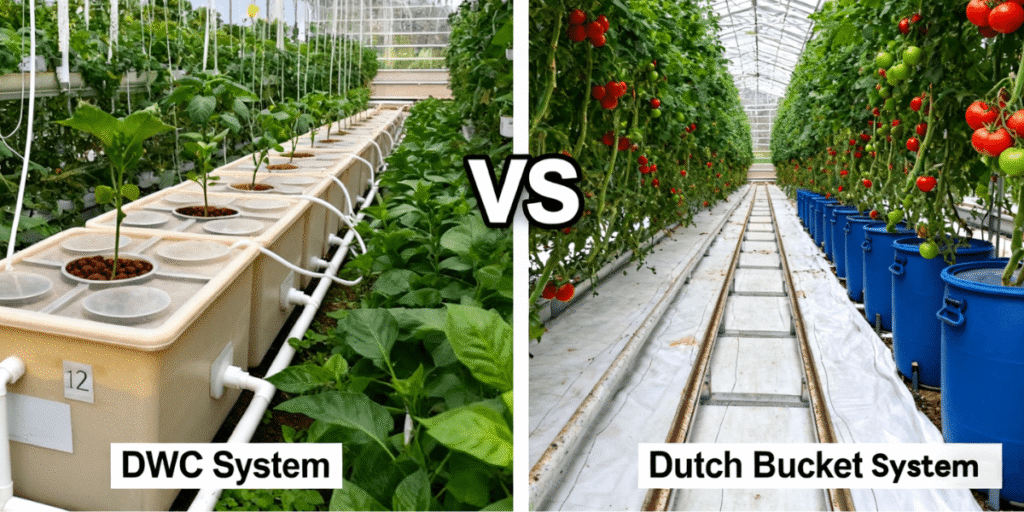

Dutch Bucket vs DWC is a question almost every hydroponic grower runs into sooner or later, especially if you are trying to decide whether to grow tomatoes, leafy greens, or both in one setup.
It is a fair question. These two systems show up everywhere, from small grow tents and backyard greenhouses to full scale commercial farms, yet they work in very different ways. The choice you make affects what you can grow, how much time you will spend on maintenance, and how steady your harvest will be.
Dutch Buckets are usually the go to option for fruiting plants like tomatoes, cucumbers, and peppers because they can support large root systems and heavy feeding. DWC, on the other hand, is known for fast growth and is especially popular for lettuce, herbs, and other leafy crops.
Once you understand how each system handles water, nutrients, and root health, it becomes much easier to pick the one that truly fits your space, your plants, and your growing style.
How Dutch Bucket and DWC Systems Actually Work
To really understand the difference between Dutch Bucket vs DWC, it helps to first look at how each system moves water, nutrients, and oxygen to plant roots. While both are hydroponic, they follow very different design ideas, and that is what leads to such different growing results.
The Dutch Bucket System is one of the most practical hydroponic setups for growing large, heavy feeding plants. It is especially popular with commercial growers because it gives each plant its own space while still being easy to manage.
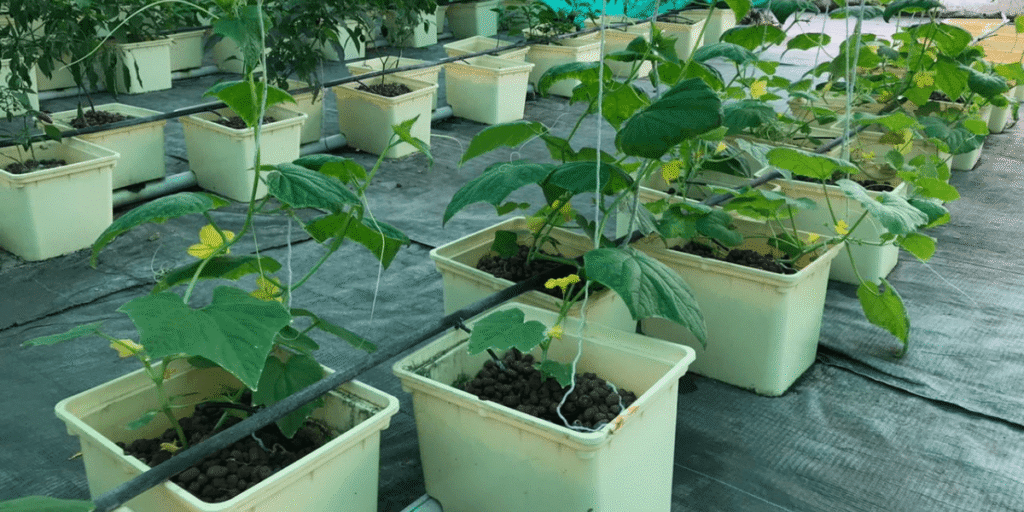
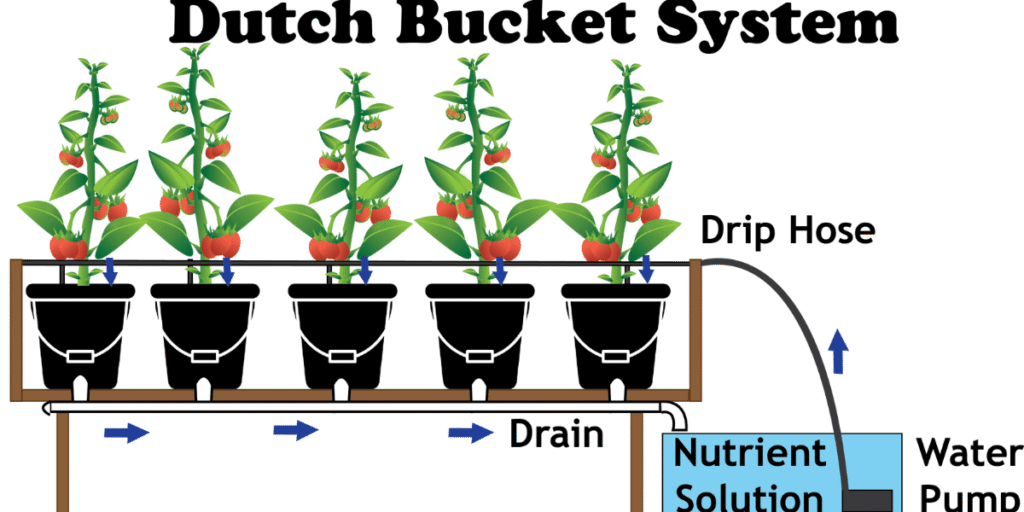
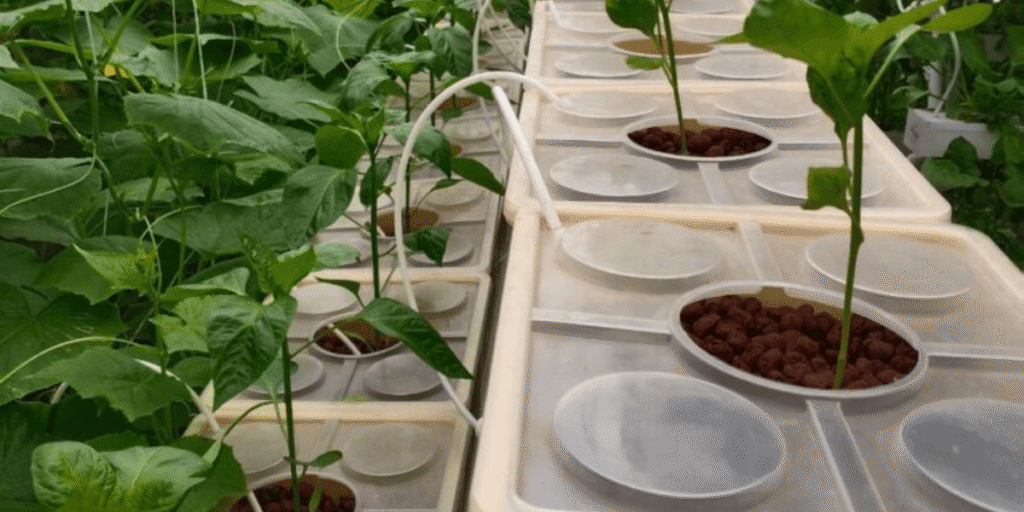
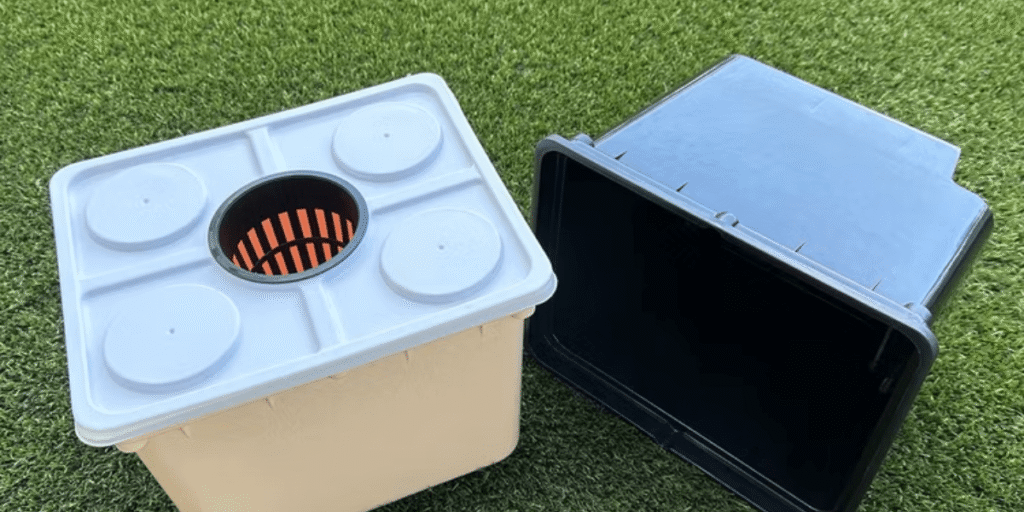
In this system, every plant sits in its own bucket filled with a growing medium like perlite or coco coir. The media holds moisture and supports the roots, so plants do not have to sit directly in water. A drip line delivers nutrient solution to each bucket on a timer, keeping feeding consistent throughout the day. Any extra solution drains back into a central reservoir, where it can be reused. This makes the system both efficient and easy to monitor.
What growers really like about Dutch Buckets is the level of control they provide. Since each plant has its own container, roots do not compete with each other for nutrients. It also becomes much easier to support tall, vining crops with stakes or trellises. That is why tomatoes, cucumbers, and peppers perform so well in this system. They need strong root support and a steady nutrient supply to produce heavy fruit.
If you are looking for a hydroponic setup that is flexible, scalable, and reliable for fruiting crops, the Dutch Bucket System is hard to beat. It is a proven way to grow healthier plants and get more consistent harvests, whether you are running a small greenhouse or a larger operation.
How Water and Nutrients Reach Plant Roots in Each System
After looking at how Dutch Buckets support plants, the next step in understanding Dutch Bucket vs DWC is to see how Deep Water Culture delivers water, nutrients, and oxygen in a completely different way. This contrast in root feeding is what makes these two systems better suited for different types of crops.
Deep Water Culture, or DWC, is often the first hydroponic system people try, and for good reason. It is simple, affordable, and delivers fast results. If you have ever wanted to grow lettuce or herbs without dealing with soil, DWC is one of the easiest ways to get started.
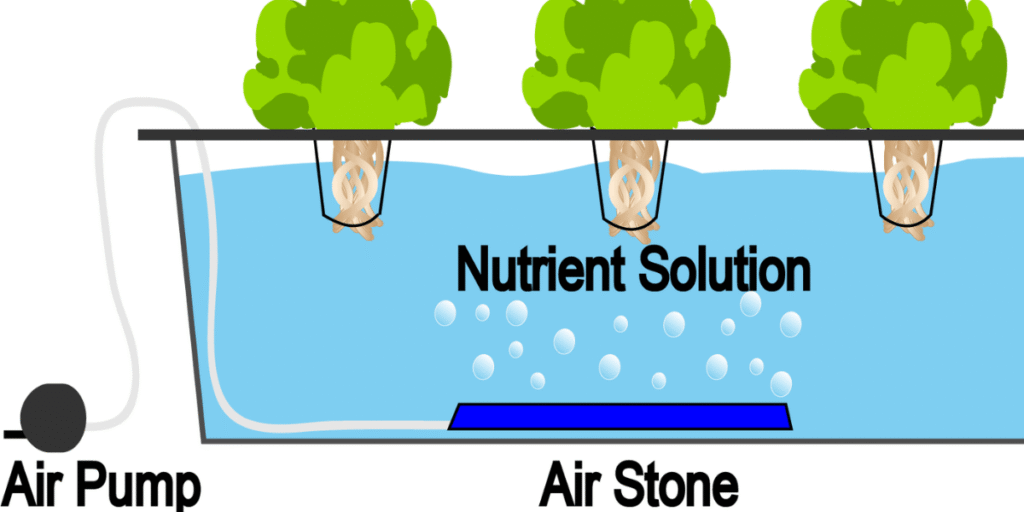
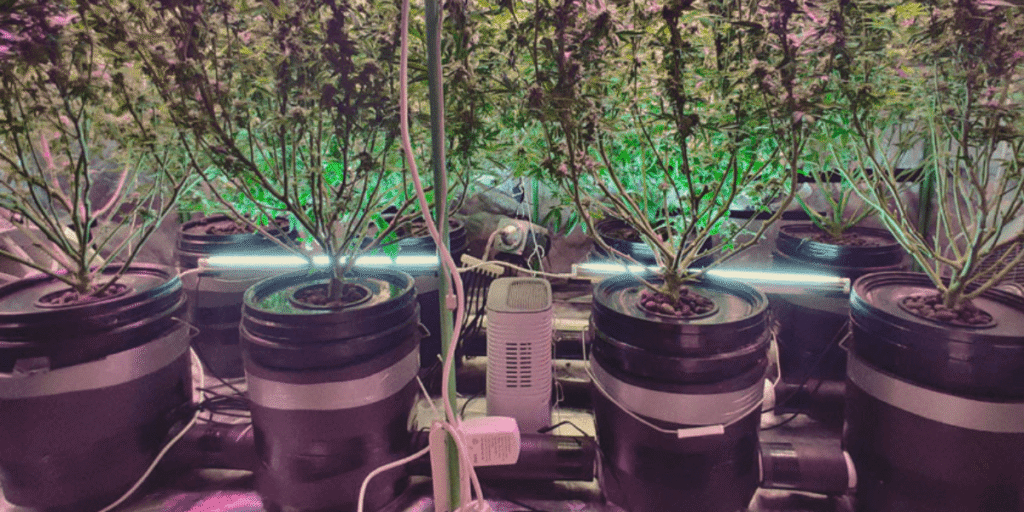
In a DWC setup, plants sit in net pots above a tank of nutrient water, with their roots growing directly into the solution. An air pump pushes bubbles through the water using an air stone, so the roots always get enough oxygen. This constant mix of water, nutrients, and air creates a near perfect growing environment. Plants do not have to search for anything because everything they need is already available.
DWC works especially well for leafy greens like lettuce, spinach, kale, and herbs. These plants thrive with a steady supply of nutrients and oxygen, and they often grow faster and more evenly than in soil. Smaller strawberry plants can also perform well in this type of system as long as the roots stay healthy and the water stays clean.
What really makes DWC appealing is how low maintenance it is. There are very few parts that can fail, and once the system is set up, it mostly runs on its own. That is why so many home growers and indoor gardeners choose DWC when they want something reliable without a lot of technical complexity.
Differences in Root Growth and Oxygen Supply
One of the most important parts of the Dutch Bucket vs DWC comparison is how each system handles roots and oxygen. The way roots are supported and how air reaches them directly affects plant size, growth speed, and long term health.
When growers compare Dutch Buckets and DWC, the biggest differences come down to how roots are supported, how nutrients are delivered, and what types of plants each system is designed to grow best.
How the Growing Environment Affects Plant Health
| Feature | Dutch Bucket System | Deep Water Culture (DWC) |
|---|---|---|
| Root environment | Roots grow in media like coco coir or perlite, which holds moisture and supports heavy plants | Roots hang directly in oxygenated nutrient water |
| Nutrient delivery | Nutrients are fed by drip irrigation on a timer and drain back to a reservoir | Roots stay submerged in nutrient solution with air stones supplying oxygen |
| Plant support | The growing medium provides strong physical support for large, fruiting plants | Limited physical support, larger plants often need extra staking |
| System complexity | Uses pumps, timers, tubing, and return lines | Very simple setup with a reservoir, net pots, air pump, and air stone |
Which Hydroponic Method Delivers Better Results for Different Crops
Looking at these differences makes the Dutch Bucket vs DWC choice much clearer. Each system shines in a different growing role, depending on the type of plants you want to produce.
Dutch Bucket systems are best for growers who want to produce tomatoes, cucumbers, peppers, and other heavy feeding fruiting crops. The growing media supports large root systems, and the drip irrigation delivers nutrients in a controlled way, which helps keep big plants stable and productive.
DWC systems, on the other hand, are ideal for lettuce, herbs, kale, spinach, and other fast growing leafy greens. With roots sitting directly in oxygen rich nutrient water, these plants can grow faster and more evenly with very little effort.
How to Decide Between a Drip System and a Water Culture System
After seeing how these two systems grow plants in very different ways, the next step in the Dutch Bucket vs DWC comparison is figuring out which one actually fits your crops, space, and growing goals.
Dutch Bucket systems are ideal for growing large, fruiting plants like tomatoes, cucumbers, and peppers because each plant has its own container with strong root support and controlled drip feeding. This makes it easier to manage big plants that need steady nutrients and physical stability.
DWC systems, on the other hand, work best for fast growing leafy greens and herbs. Since the roots sit directly in oxygen rich nutrient water, plants can grow quickly with very little setup and minimal day to day maintenance.
Side by Side Comparison of Dutch Buckets and DWC
| Feature | Dutch Bucket System | DWC (Deep Water Culture) |
|---|---|---|
| Best for | Tomatoes, cucumbers, peppers | Lettuce, herbs, leafy greens |
| Root support | Growing media in individual buckets | Roots float directly in water |
| Nutrient delivery | Drip irrigation with drainage | Roots stay in nutrient solution |
| Oxygen supply | Air plus media porosity | Air pump and air stone in the reservoir |
| Growth style | Stable and controlled, supports heavy plants | Very fast, especially for greens |
| Skill level | Beginner to intermediate | Very beginner friendly |
| System size | Flexible and scalable | Compact and space saving |
Growing Tomatoes and Peppers in Dutch Buckets vs DWC
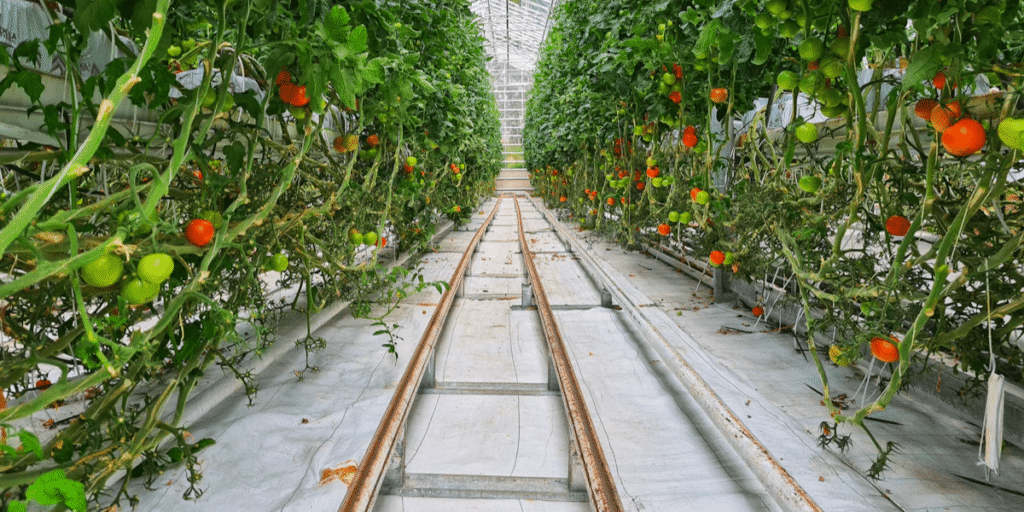
When it comes to the Dutch Bucket vs DWC debate, fruiting crops like tomatoes and peppers are where the difference between these two systems becomes most obvious. These plants grow large, feed heavily, and place much higher demands on their root systems than leafy greens do.
Which System Handles Heavy Feeding Crops Better
1. Strong, stable support for heavy plants
Tomatoes and peppers grow tall, produce heavy fruit, and need firm root support. Dutch Buckets use media like coco coir or perlite to hold the plant in place while delivering water and nutrients directly to the root zone. This keeps large, fruiting plants upright and stable, allowing them to carry high yields without stress.
2. Each plant is easier to control and manage
Because every plant grows in its own bucket, problems stay isolated. If one tomato plant gets sick or the media needs replacing, you can deal with that single bucket without affecting the rest of the system. This makes Dutch Buckets much easier to manage than shared root systems when you are growing high value crops.
3. Healthier roots with better airflow
Media based systems naturally keep air moving around the roots. Coco coir and perlite prevent roots from sitting in stagnant water, reducing the risk of root suffocation compared to water only systems.
For a complete step by step tomato setup, see our Dutch Bucket Tomato Growing Guide.
Common Problems Growers Face with Both Systems
No matter which side of the Dutch Bucket vs DWC comparison you choose, both systems come with their own set of challenges. Most problems do not come from the plants themselves, but from how water, oxygen, and nutrients are managed inside the system.
1. Water and oxygen are often unbalanced
In Dutch Bucket systems, a very common mistake is running the drip too long or too often. When the growing media stays soaked, roots do not get enough oxygen, which leads to weak growth and root disease.
In DWC, the problem is the opposite. If the air pump is too small or stops working, roots can suffocate quickly because they rely completely on dissolved oxygen in the water.
2. Nutrient control is more sensitive than people expect
Both systems depend on liquid nutrients, but many growers underestimate how quickly EC and pH can change. In Dutch Buckets, uneven drip flow can cause some plants to receive more nutrients than others. In DWC, small mistakes in mixing or topping up the reservoir can affect all plants at once because their roots share the same solution.
3. System design and maintenance are often overlooked
With Dutch Buckets, poor pipe layout or incorrect drain height can lead to flooding, dry spots, or unstable moisture levels in the growing media. With DWC, dirty reservoirs, warm water, and infrequent water changes quickly lead to algae, bacteria, and root problems. Both systems perform best when the setup is clean, well planned, and checked regularly.
Why Leafy Greens Often Thrive in Water-Based Systems
In the Dutch Bucket vs DWC comparison, this is where DWC really shines. While Dutch Buckets dominate fruiting crops, water based systems are especially well suited for fast growing leafy greens.
Comparing Growth Speed in DWC and Media Based Systems
1. Easy to start and budget friendly
DWC systems are simple to build and do not require many parts. With just a container, an air pump, and a few net pots, you can start growing right away. This makes DWC especially appealing for beginners or small indoor growers.
2. Delivers very fast growth
Because roots sit directly in oxygen rich nutrient water, plants never have to search for food. Leafy greens like lettuce, spinach, and basil respond extremely well to this setup and often grow much faster than in soil or media based systems.
3. Uses water and nutrients efficiently
DWC has very little water loss from evaporation or runoff. The nutrient solution stays in one reservoir, making it easy to monitor, adjust, and reuse. This keeps operating costs low while maintaining stable plant growth.
What to Think About Before Choosing a Hydroponic Setup
This is another important part of the Dutch Bucket vs DWC decision. Even though DWC works extremely well for leafy greens, it is not always the best choice for larger or heavier crops.
DWC performs best with lightweight plants, but it struggles with large, heavy plants. Crops like mature peppers, tomatoes, or melons become top heavy as they grow, and the net pots and lids in a DWC system often cannot provide enough physical support. At the same time, because the roots sit directly in water, the system is very sensitive to temperature changes. If the water gets too warm, oxygen levels drop and harmful microbes can build up, increasing the risk of root rot. That is why growers using DWC need to pay close attention to both plant support and water temperature.
How Grow Media Changes Root Behavior
When comparing Dutch Bucket vs DWC, one of the biggest differences is how the growing medium affects root health, moisture retention, and nutrient delivery. In media-based systems like Dutch Buckets, the choice of substrate can make or break your harvest.
| Growing Medium | Advantages | Things to Watch Out For |
|---|---|---|
| Clay Pebbles (Hydroton) | Drains extremely well, reusable, pH neutral | Doesn’t hold much water, so frequent dripping is needed |
| Coco Coir | Holds water well and allows plenty of oxygen for roots | Needs buffering before use to remove salts, can compact over time |
| Perlite | Very light, excellent aeration, drains quickly | Holds very little water, can wash out of the bucket easily |
Choosing the right growing medium for a Dutch Bucket system is crucial. Expanded clay provides excellent drainage, coconut coir balances moisture and aeration, and perlite is lightweight and highly porous, though it dries quickly. At the same time, using a pH timer or pH/EC meter to monitor the nutrient solution ensures plants grow in optimal conditions, improving yield and quality.

Greenfuturehydro pH Tester for Hydroponics Systems and Greenhouse Growing
Cost, Maintenance, and Setup Differences
Another important part of the Dutch Bucket vs DWC comparison is how each system impacts your budget, time, and available space. Understanding these factors can help you pick the system that fits your growing goals and lifestyle.
| Feature | Dutch Bucket | Deep Water Culture (DWC) |
|---|---|---|
| Initial Cost (per plant) | Medium to high – more components like buckets, tubing, and drip lines increase setup costs | Low – simple reservoir, net pots, and air pump keep costs minimal |
| Maintenance Difficulty | Medium – you need to check each drip line and bucket regularly to ensure proper flow | Low – mostly monitoring the reservoir and air stone, much less hands-on work |
| Space Utilization | High – buckets can be arranged vertically or in rows to maximize space | Low – reservoirs take up horizontal space, limiting stacking options |
Dutch Buckets cost more and require more hands-on maintenance, but they are excellent for larger fruiting plants and vertical setups that make the most of available space. DWC, on the other hand, is cheaper and easier to manage, making it ideal for leafy greens in smaller or indoor environments where simplicity and speed are priorities.
How Disease Risk Differs Between Recirculating and Drain-to-Waste Systems
When comparing Dutch Bucket vs DWC, one of the most critical considerations is disease management. How water circulates, whether it is shared in a recirculating system or discarded in a drain-to-waste setup, directly affects how quickly pathogens can spread.
Why Root Diseases Spread More Easily in Shared Reservoirs
In recirculating hydroponic systems like Dutch Buckets and DWC, all plants share the same nutrient solution. Water flows from the reservoir to each plant and then back again, carrying anything that’s in it. If one plant becomes infected with bacteria, fungi, or root pathogens, those organisms can easily travel through the water and reach every other plant. This is why problems in hydroponics often appear to affect many plants at once if they are not caught early.
How to Protect Healthy Plants When One Gets Sick
When you notice yellowing leaves, wilting, slow growth, or strange spots, it’s a warning sign that something is wrong. Acting quickly is critical. Remove the affected bucket from the system and isolate it from the rest. Doing so prevents the pathogen from spreading through the shared water and potentially infecting healthy plants. Often, removing one sick plant early can save dozens of others.
When a Non Recirculating System Is the Safer Choice
Some growers reduce disease risk by switching to a drain-to-waste setup. In this type of system, nutrient solution that drains from each bucket is discarded rather than returned to the reservoir. While this uses more water and nutrients, it dramatically lowers the chance that a single sick plant will infect the entire crop. This approach is especially valuable for large or high-yield fruiting plants like tomatoes and peppers.
Small Daily Habits That Prevent Major Crop Loss
Good hygiene and daily monitoring are just as important as system design. Check roots and lower leaves regularly, clean buckets, tubing, and reservoirs on a schedule, and avoid using dirty tools or hands. Diseases in hydroponics can spread faster than in soil, but they are also easier to prevent when you catch issues early and keep the system clean.
Answers to Common Questions About Dutch Buckets and DWC
Both systems benefit from daily monitoring, especially when plants are young. DWC is simpler you mostly just check the main reservoir. For Dutch Buckets, check the reservoir daily, and every now and then, check the runoff from a bucket to make sure nutrients are being absorbed properly.
DWC is usually the easiest for beginners. The setup is straightforward, there’s minimal plumbing, and it’s easy to maintain.
You can, but it’s often overkill. Dutch Buckets are designed for larger, fruiting plants. For small leafy herbs, DWC or NFT is much more efficient and cost-effective.
It depends on the medium. Inert media like clay pebbles can be cleaned and reused multiple times. Organic media like coco coir should ideally be replaced after 1–2 growing cycles to prevent salt buildup and reduce the risk of pathogens.
DWC mostly runs a continuous air pump, while Dutch Buckets use both an air pump and a water pump on a timer. The difference isn’t huge, but DWC is usually slightly more energy-efficient.
Which Hydroponic System Is Right for Your Growing Goals?
Both Dutch Buckets and DWC work well, they’re just designed for different types of growers and crops.
If your main focus is leafy greens, herbs, or small plants, DWC is hard to beat. It’s simple, inexpensive to set up, and once it’s running, there isn’t much to worry about. You drop the roots into oxygenated nutrient water, and the plants thrive. For home growers, small spaces, or anyone who wants fast results with minimal plumbing, DWC usually makes the most sense.
Dutch Buckets, on the other hand, are better suited for big, hungry plants. Tomatoes, peppers, cucumbers, and other fruiting crops need more root space, stronger support, and precise control over nutrient delivery. With each plant in its own bucket, you can manage growth, replace media, and support heavy vines more easily. It takes more work to set up, but it also gives you greater control and higher potential yields.
The choice isn’t about which system is universally “better.” It’s about what you want to grow and how hands-on you want to be. For fast-growing leafy greens and simplicity, DWC keeps things easy. For large plants and maximum harvests, Dutch Buckets are usually the more effective tool.
Final Thoughts on Choosing Between These Two Methods
Whether you choose the simplicity of DWC or the versatility of Dutch Buckets, having the right equipment makes all the difference. From reliable air pumps and sturdy buckets to precise pH and EC monitoring tools, Greenfuturehydro provides everything you need to build a productive, high-yield hydroponic garden.
Start growing with confidence. Explore our full range of hydroponic components, nutrient solutions, and starter kits today. If you need guidance, our team at Greenfuturehydro is ready to help you design, set up, and optimize your system for the best results.
Join our community of hydroponic enthusiasts and stay inspired. Follow us on Instagram @Greenfuturehydro,
Take the first step toward growing healthy, thriving plants with ease. You are never on your own. If you have questions or need advice, reach out to us anytime:
📩 info@greenfuturehydro.com
📞 +86 13487543942
We love helping growers of all levels achieve success with hydroponics and we are here to support you every step of the way.