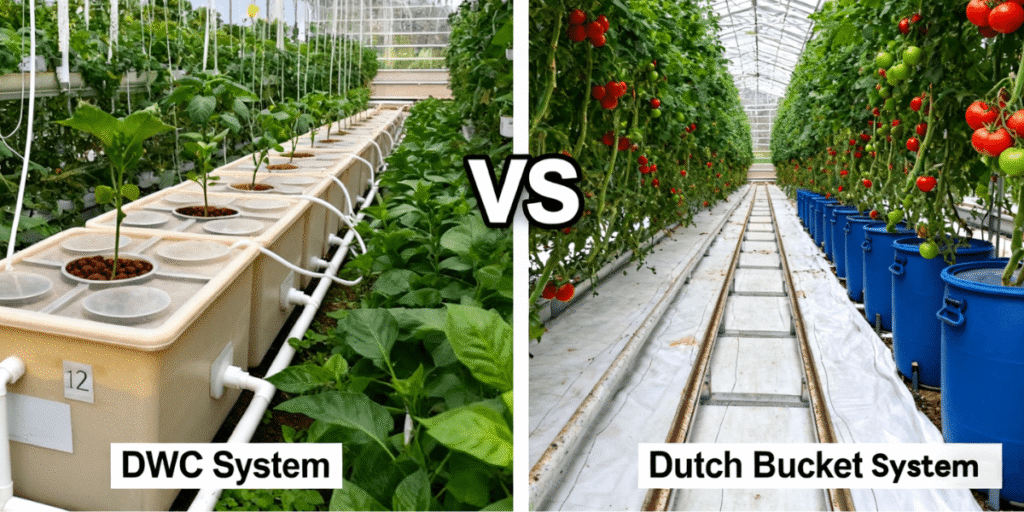
Dutch Bucket vs DWC: Choosing the right hydroponic system is one of the most important decisions a grower can make. It directly impacts plant health, daily maintenance, and long-term productivity. Dutch Bucket hydroponics and DWC, or Deep Water Culture, are two of the most widely used systems in modern hydroponic growing. While both deliver nutrients directly to plant roots, they operate on very different principles. Dutch Bucket systems use drip irrigation combined with growing media to support plants, whereas DWC systems allow roots to grow directly in an oxygen-rich nutrient solution.
These two systems are often compared because they represent distinct approaches to hydroponic cultivation. Whether you are growing leafy greens at home, experimenting with herbs on a balcony, or setting up a greenhouse for fruiting crops, Dutch Bucket and DWC are usually at the top of the list. Each system has its strengths, but also comes with limitations depending on your crop type, available space, and how much maintenance you are prepared to manage.
In this guide, we’ll explore Dutch Buckets vs DWC in a practical, experience-based way. You’ll learn how each system works, which crops perform best, the differences in cost and maintenance, and common challenges to watch for. By the end, you’ll have a clear framework to evaluate both systems and choose the hydroponic setup that best fits your growing goals and real-world conditions.
What Is a Dutch Bucket Hydroponic System?

1. How a Dutch Bucket Hydroponic System Works: Step-by-Step Guide
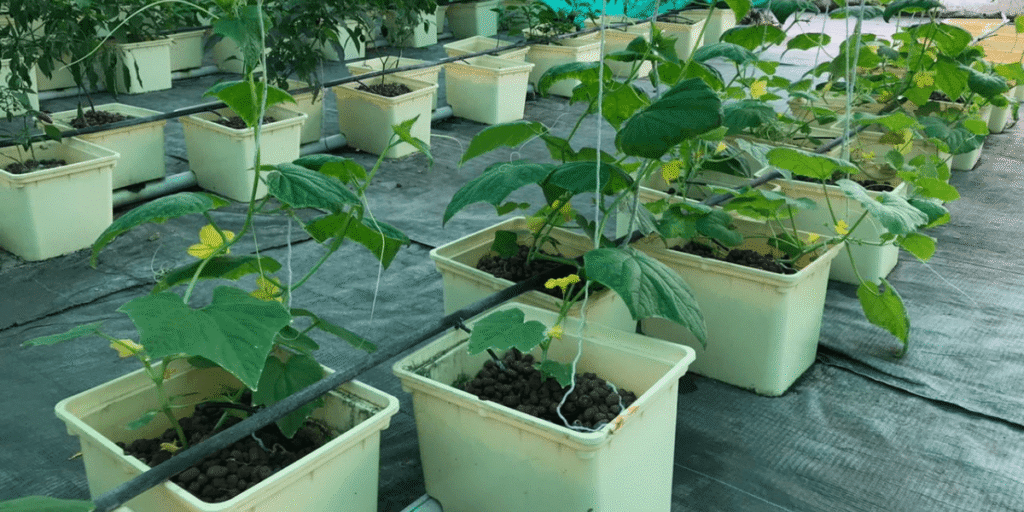
A Dutch Bucket system, also known as a Bato Bucket system, is a type of drip hydroponic system that uses individual growing containers filled with inert media. Each bucket receives nutrient solution through drip irrigation, delivering water and nutrients directly to the root zone in a slow and controlled way. Excess solution drains from the bottom of the bucket and flows back to a central reservoir through a return line, allowing the system to recirculate nutrients efficiently.
Because the roots are anchored in growing media rather than suspended in water, Dutch Bucket hydroponics offers excellent physical support and stable moisture levels. This makes the system especially reliable for long-term crops that require consistent feeding over many weeks or months.
2. Key Components You Need for a Successful Dutch Bucket Setup
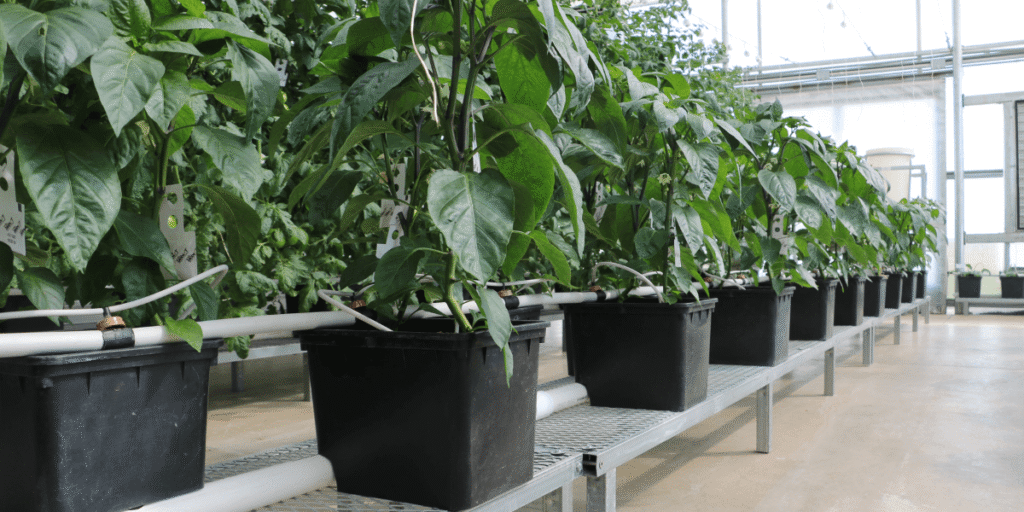
A typical Dutch Bucket setup consists of several essential components working together as one system. The growing buckets hold the plants and inert media, such as perlite or clay pebbles. Drip lines and emitters deliver nutrient solution from the main reservoir to each bucket at a controlled rate. A return pipe collects the excess solution and channels it back to the reservoir for reuse.
In addition, the system includes a water pump to drive irrigation and, in most cases, a timer to regulate feeding cycles. This modular design makes Dutch Bucket systems easy to expand, maintain, and adapt to different growing spaces, from small greenhouses to large commercial operations.
3. Best Crops to Grow in Dutch Bucket Hydroponics: Fruits, Vegetables, and Herbs
Dutch Bucket hydroponics is especially well suited for fruiting and large plants that need strong root support and steady nutrient delivery. Crops such as tomatoes, cucumbers, peppers, and eggplants thrive in this system because the growing media helps stabilize the plant while allowing roots to access both oxygen and nutrients.
For growers focused on high-yield, long-cycle crops, Dutch Bucket systems provide a balanced combination of structure, flexibility, and control. This is why they are widely used in greenhouse production and commercial hydroponic farms around the world.
What Is a DWC (Deep Water Culture) System?

1. How DWC Hydroponics Works Differently from Dutch Bucket Systems
DWC, or Deep Water Culture, is one of the simplest and most direct forms of hydroponic growing. In a DWC system, plant roots are suspended directly in a nutrient-rich water solution, allowing them constant access to water and nutrients. To prevent roots from suffocating, air pumps continuously supply oxygen to the solution through air stones, creating a highly oxygenated root environment.
This constant combination of nutrients and oxygen is what makes DWC hydroponics famous for fast growth. With no growing media to restrict root expansion, plants can focus their energy on leaf development rather than searching for water or nutrients.
2. Essential Parts and Step-by-Step Setup Tips for DWC Hydroponics
A standard DWC setup is made up of a few essential components. The reservoir holds the nutrient solution and supports the plants from below. Net pots are placed in the lid of the reservoir to hold the plants in position, while their roots extend directly into the water. An air pump connected to air stones continuously injects oxygen into the solution, ensuring healthy root respiration.
Because the system has very few moving parts, DWC systems are easy to assemble and relatively low-cost. However, this simplicity also means that the system relies heavily on proper oxygenation and water quality to remain stable.
3. Ideal Crops for Deep Water Culture: Fast-Growing Greens and High-Yield Plants
DWC hydroponics is best suited for leafy greens and herbs that have relatively small root systems and short growth cycles. Crops such as lettuce, basil, mint, spinach, and kale perform exceptionally well in DWC systems due to their fast growth and light structure.
For growers looking for quick harvests and minimal setup, DWC offers an efficient and beginner-friendly option. This is why it is commonly used in home hydroponic gardens, classrooms, and small-scale indoor growing setups.
Dutch Bucket vs DWC: Hydroponic System Comparison
When it comes to hydroponic systems, Dutch Bucket (Bato Bucket) and DWC (Deep Water Culture) are two of the most widely used methods. Both deliver nutrients efficiently and save water, but they differ significantly in growing method, root support, oxygen delivery, maintenance effort, and scalability.
Both systems deliver nutrients efficiently and save water, but they differ in growing method, root support, oxygen delivery, maintenance, and scalability. So which one is actually right for your setup? If you’re choosing between Dutch Bucket and DWC, this guide walks you through the decision: Which Hydroponic System Is Right for You?
Let’s break it down in a clear, grower-friendly way.
| Category | Dutch Bucket System | DWC (Deep Water Culture) |
|---|---|---|
| Growing method | Drip irrigation with inert media | Roots fully submerged in nutrient solution |
| Root support | Clay pebbles, coco coir, perlite | Minimal (net pots only) |
| Oxygen supply | Media aeration + flowing nutrient solution | Air pump and air stones required |
| Power outage tolerance | High – roots stay moist and aerated | Low – oxygen loss affects roots quickly |
| Maintenance level | Medium | Low |
| Failure impact | Localized (one bucket = one plant) | System-wide (shared reservoir) |
| Scalability | Excellent, modular expansion | Limited, system-based |
| Space requirement | Larger footprint | Compact |
| Best crop types | Tomatoes, cucumbers, peppers | Lettuce, herbs, leafy greens |
| Typical use case | Commercial farms, greenhouses | Home growing, education |
| Skill level | Intermediate to advanced | Beginner-friendly |
Which Plants Grow Best in Each System?
1. Fruiting Vegetables vs Leafy Greens: Which Hydroponic System Suits Your Crop?
One of the clearest differences between Dutch Bucket and DWC systems lies in the type of crops they support best. Fruiting plants such as tomatoes, cucumbers, peppers, and eggplants tend to perform better in Dutch Bucket hydroponic systems. These plants grow larger, become heavier over time, and require strong physical support to remain stable throughout a long growing cycle. The growing media used in Dutch Bucket systems helps anchor the roots and supports the plant’s weight as it matures and produces fruit.
On the other hand, leafy greens and herbs are a natural fit for DWC hydroponics. Crops like lettuce, basil, mint, and spinach have lighter structures and shorter growth cycles. Since they do not require extensive root anchoring, they benefit from the constant access to water and oxygen that DWC systems provide, resulting in fast, uniform growth.
2. How Root Structure and Plant Size Affect Dutch Bucket and DWC Performance
Root structure plays a major role in determining which hydroponic system will perform best. Large fruiting crops develop extensive root systems that need space, oxygen, and stability over time. In a Dutch Bucket system, the combination of growing media and drip irrigation creates a balanced root environment that supports long-term health and consistent nutrient uptake.
In contrast, many leafy greens have fine, compact root systems that adapt well to being submerged in nutrient solution. In a DWC system, these roots can spread freely in oxygenated water without the risk of plant instability. Understanding how roots grow is often more important than focusing on the visible part of the plant.
3. Choosing the Right System for Your Crop Type and Growing Goals
There is no single “best” hydroponic system that works for every plant and every grower. The real success factor lies in matching the system to the crop’s biological needs and the grower’s goals. A well-managed DWC system can outperform a poorly chosen Dutch Bucket setup, and the opposite is just as true.
By choosing the right system from the start, growers can reduce maintenance issues, minimize plant stress, and achieve more predictable results. In hydroponics, success is less about the system you use and more about how well that system fits your plants, space, and growing strategy.


Maximizing Plant Growth and Root Health in Dutch Bucket vs DWC Hydroponics
1. Growth Rate Comparison: Dutch Bucket vs DWC Hydroponics Explained
When it comes to growth speed, DWC hydroponic systems are often associated with rapid early development. Because plant roots are constantly surrounded by nutrient-rich, oxygenated water, leafy greens and herbs can grow noticeably faster compared to many other hydroponic methods. This makes DWC especially attractive for short-cycle crops where quick harvests are a priority.
Dutch Bucket systems, however, tend to shine over longer growing periods. While initial growth may be slightly slower, plants benefit from a more stable root environment over time. For fruiting crops that grow for several months, this long-term consistency often results in higher overall yield and better fruit quality rather than just faster early growth.
2. Root Oxygenation, Nutrient Uptake, and Rot Risk in Both Systems
Root oxygenation is a critical factor in hydroponic success, and both systems approach it differently. In DWC systems, oxygen is supplied directly through air pumps and air stones. When oxygen levels are well maintained and water temperatures are kept under control, roots remain healthy and white. However, if aeration fails or water becomes too warm, oxygen levels can drop quickly, increasing the risk of root rot.
Dutch Bucket systems rely on growing media and drip irrigation to create air pockets around the roots. This passive oxygenation method is generally more forgiving, especially during power interruptions or pump failures. As a result, Dutch Bucket systems often offer better protection against sudden root health issues in long-term growing setups.
3. Long-Term vs Quick-Cycle Crops: How to Pick the Right Hydroponic System
Different hydroponic systems perform better depending on crop duration. DWC systems are ideal for short-cycle crops such as lettuce and herbs, where plants are harvested before root systems become overly dense or stressed. The simplicity of the system supports fast turnover and consistent results.
Dutch Bucket systems, on the other hand, are better suited for long-term crops that require sustained nutrient delivery and physical stability. For growers focusing on tomatoes, peppers, or cucumbers, Dutch Bucket hydroponics provides a more adaptable and resilient environment throughout the entire growth cycle.
Dutch Bucket vs DWC Hydroponics: Setup Cost, Maintenance, and Skill Requirements
1. Setup Cost Comparison: Dutch Bucket vs DWC Hydroponics
When comparing the initial cost of Dutch Bucket vs DWC systems, DWC is generally more affordable to get started. A basic DWC setup requires fewer components, usually just a reservoir, net pots, an air pump, and air stones. This makes it an attractive option for beginners or growers working with a limited budget.
Dutch Bucket systems typically involve a higher upfront investment. In addition to the growing buckets, they require drip irrigation lines, emitters, a return line, a water pump, and often a timer. While the initial setup cost is higher, the system is designed for long-term use and can support larger plants and higher-value crops.
2. Daily Care, Monitoring, and Troubleshooting Tips for Both Systems
DWC systems are simple in structure, but they demand close attention to water quality. Growers need to regularly monitor nutrient concentration, pH levels, water temperature, and oxygen supply. Any disruption, such as an air pump failure, can quickly affect root health. As a result, DWC maintenance tends to be low in hardware complexity but high in monitoring frequency.
Dutch Bucket systems require more mechanical upkeep, such as checking drip emitters for clogs and ensuring proper drainage. However, the growing media provides a buffer that helps stabilize the root environment. This means small fluctuations in nutrients or irrigation timing are often less critical, making day-to-day management more forgiving.
3. Beginner-Friendly Hydroponic Systems: Which One Is Easier to Manage
For complete beginners, DWC hydroponics can feel more approachable due to its simple setup and fast visible results. Seeing plants grow quickly can be motivating, especially in the early stages of learning hydroponics. However, beginners must be prepared to monitor the system closely to avoid common issues like root rot or oxygen deficiency.
Dutch Bucket systems may have a steeper learning curve at the beginning, but they often reward growers with greater stability over time. For beginners interested in fruiting crops or long-term projects, Dutch Bucket hydroponics can be a more reliable and scalable choice once the basic setup is understood.


Best Use Scenarios: Home, Greenhouse, or Commercial Growing
1. Small-Space Hydroponics: Indoor Gardens, Balconies, and DIY Systems
For home growers working with balconies, spare rooms, or other small spaces, DWC systems are often the most practical choice. Their compact design, minimal plumbing, and simple setup make them easy to fit into tight environments. Leafy greens and herbs grow quickly in DWC, allowing home growers to harvest fresh produce regularly without needing complex infrastructure.
Dutch Bucket systems can also be used in small spaces, but they usually require more room for piping, drainage, and plant support. Unless the goal is to grow a small number of fruiting plants, DWC tends to offer a better balance of simplicity and space efficiency for home hydroponic gardening.
2. Greenhouse Applications: Optimizing Dutch Bucket and DWC Systems
In greenhouse settings, both Dutch Bucket and DWC systems can be effective, but their roles often differ. Dutch Bucket hydroponics is widely used in greenhouses for growing tomatoes, cucumbers, and peppers due to its strong plant support and long-term stability. The drip-fed design integrates well with automated irrigation systems and allows growers to fine-tune nutrient delivery over extended growing cycles.
DWC systems are more commonly used in greenhouse environments for leafy greens and herbs, especially when fast turnover and uniform growth are the main priorities. However, careful control of water temperature and oxygen levels becomes increasingly important as greenhouse temperatures rise.
3. Scaling Up for Commercial Production: Choosing the Right Hydroponic System
For commercial hydroponic operations, scalability and reliability are key factors. Dutch Bucket systems are often favored for large-scale production of fruiting crops because they are modular, easy to expand, and more tolerant of short-term system disruptions. This reliability makes them well suited for long-term, high-value crops that demand consistent performance.
DWC systems can also be used commercially, particularly in vertical farming or leafy green production. However, at scale, they require robust monitoring systems to manage oxygenation and water quality. Choosing between Dutch Bucket vs DWC at a commercial level ultimately depends on crop type, production volume, and the level of technical control available.
Common Issues in Dutch Bucket and DWC Hydroponic Systems and How to Solve Them
1. Common Dutch Bucket System Issues and How to Fix Them Quickly
One of the most common problems in Dutch Bucket hydroponic systems is clogged drip emitters. Because nutrient solution flows through small irrigation lines, mineral buildup or organic debris can slowly restrict water flow, leading to uneven feeding between plants. Another frequent issue is poor drainage, which can cause water to accumulate in the growing media and reduce oxygen availability around the roots.
These problems often develop gradually, making them easy to overlook at first. Regularly flushing irrigation lines and checking that excess solution flows freely back to the reservoir can prevent most Dutch Bucket system issues before they impact plant health.
2. Mistakes to Avoid in Deep Water Culture Hydroponics
DWC systems are simple in design, but that simplicity can be misleading. One of the most common mistakes is underestimating the importance of oxygen supply. If air pumps fail or air stones become clogged, oxygen levels in the nutrient solution can drop quickly, stressing roots and increasing the risk of root rot. Water temperature is another critical factor. Warm water holds less oxygen, making DWC systems more vulnerable in hot environments.
Many growers also overlook the need for frequent monitoring. In DWC hydroponics, small changes in pH or nutrient concentration can affect plants much faster than in media-based systems.
3. Practical Tips to Maximize Growth and Prevent Root Problems
The best way to avoid problems in both systems is to focus on consistency rather than complexity. For Dutch Bucket setups, using clean water, quality growing media, and routine system checks helps maintain stable nutrient delivery. For DWC systems, investing in a reliable air pump and keeping water temperatures within an optimal range can significantly reduce root health risks.
Regardless of the system, establishing a simple maintenance routine and observing plant roots regularly will reveal early warning signs long before visible damage appears. Preventive care not only protects yield but also makes hydroponic growing more enjoyable and predictable.


Final Decision Guide: Should You Choose Dutch Bucket or DWC?
1. Quick Checklist for Selecting the Best Hydroponic System for Your Farm
Before choosing between Dutch Bucket vs DWC, it helps to step back and look at a few practical factors. Start with your available space. If you are working in a small indoor area or on a balcony, compact DWC systems are often easier to manage. Next, consider the crops you want to grow. Fruiting plants usually require more support and long-term stability, while leafy greens thrive in fast, water-based systems.
Budget and experience level also matter. DWC systems generally have lower startup costs and fewer components, making them appealing to beginners. Dutch Bucket systems involve a slightly higher initial investment but offer greater control and flexibility for long-term growing projects. Taking a moment to evaluate these factors can prevent costly adjustments later.
2. “Choose This System If…” Guide Based on Crop Type, Space, and Goals
Choose a Dutch Bucket system if your goal is to grow fruiting crops such as tomatoes, cucumbers, or peppers, especially in a greenhouse or commercial setting. This system provides strong root support, better tolerance to minor system disruptions, and long-term reliability for extended growing cycles.
Choose a DWC system if you want fast-growing leafy greens and herbs, have limited space, or are just getting started with hydroponics. DWC offers quick results and a straightforward setup, making it ideal for short-cycle crops and small-scale growing environments.
In the end, the best hydroponic system is not about which one is more advanced, but which one fits your plants, space, and growing goals most naturally.
Frequently Asked Questions About Dutch Bucket and DWC Hydroponic Systems
DWC systems are more vulnerable because roots are fully submerged in water. If aeration fails or water temperature rises, roots can quickly develop rot. Dutch Bucket systems provide better oxygenation through growing media, which makes them more forgiving for long-term crops.
Dutch Bucket systems are generally more water-efficient due to recirculating drip irrigation. DWC recirculates nutrient solution as well, but frequent top-ups and evaporation can make it slightly less efficient over time, especially in warm climates.
Yes, most nutrient solutions can work in both systems, but adjustments may be needed. DWC usually benefits from slightly lower nutrient concentrations because submerged roots absorb nutrients quickly, while Dutch Bucket systems may require more controlled drips for uniform feeding.
Clay pebbles and perlite are the most recommended because they provide good root aeration, support plant weight, and allow excess solution to drain easily. Proper media choice reduces the risk of waterlogging and ensures stable growth for fruiting crops.
DWC is often easier for beginners because it has a simple setup and shows fast results with leafy greens and herbs. Dutch Bucket systems require more initial setup and monitoring but offer better stability for larger, long-term crops like tomatoes and cucumbers.
Final Thoughts and Next Steps for Dutch Bucket vs DWC Hydroponics Success
There is no single “best” hydroponic system. The most important factor is choosing the system that fits your plants, space, budget, and growing goals. Dutch Bucket and DWC each have their strengths, and the right choice depends on whether you prioritize fast leafy growth, long-term fruiting crops, or the level of monitoring and maintenance you are comfortable with.
Experimentation is key. Start small, observe how your plants respond, and adjust your system as needed. Over time, you’ll gain a better understanding of what works best for your unique growing conditions.
For next steps, consider trying a small-scale DWC setup for leafy greens or a single Dutch Bucket module for fruiting crops. Monitor your water, nutrients, and plant health closely, and gradually expand your system as you gain confidence. Learning by doing is the fastest way to become a successful hydroponic grower.
Want expert guidance for your hydroponic setup?
📩 info@greenfuturehydro.com
📞 +86 13487543942
Follow us on Instagram @Greenfuturehydro for daily tips, step-by-step tutorials, and real farm success stories. Start growing fresh hydroponic fodder today and watch your livestock thrive in just 7 days! 🌿🐄🐑✨