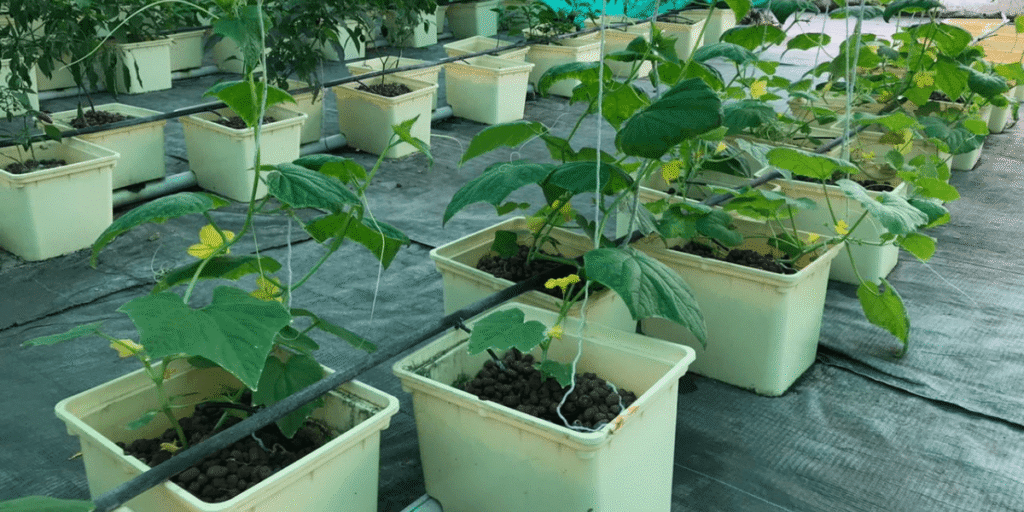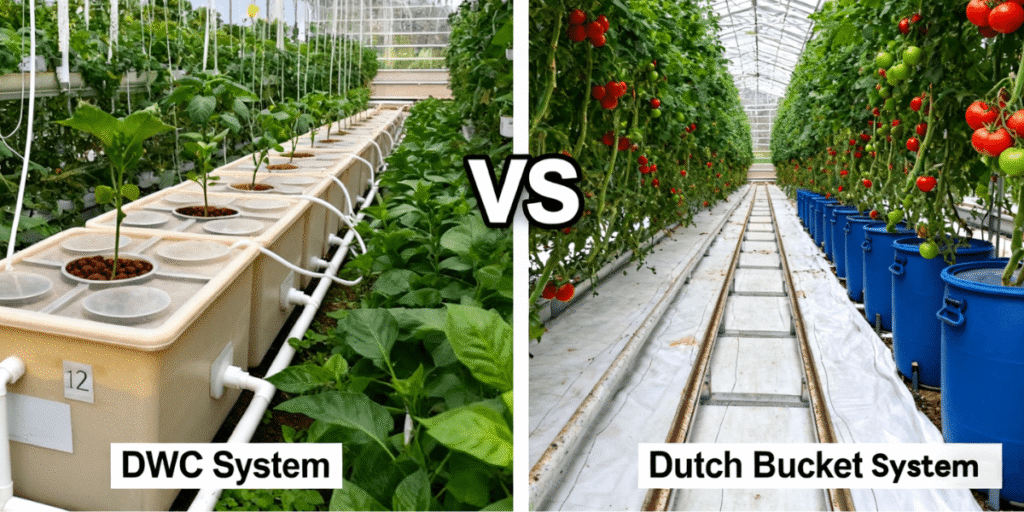
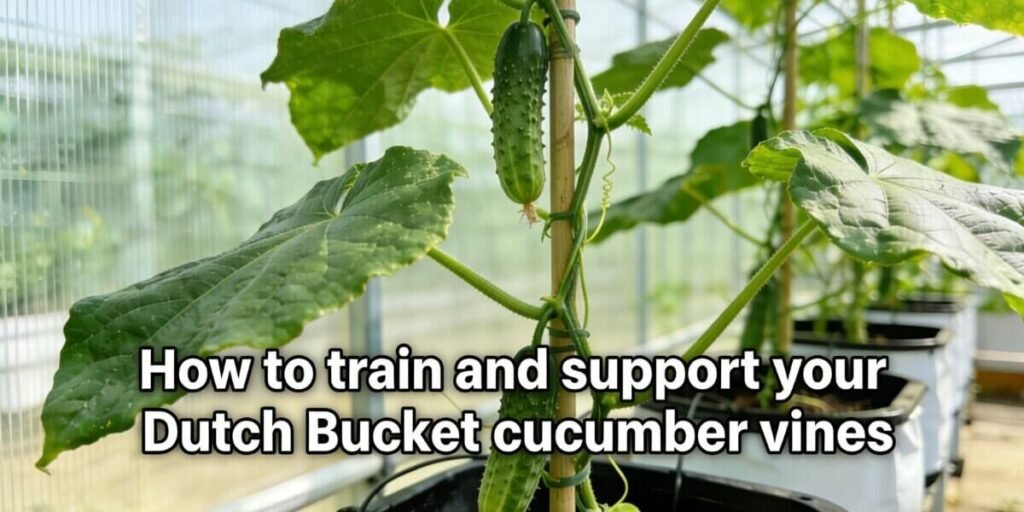

Train Dutch Bucket cucumber to promote strong roots, high yields, and healthy, well-supported vines. These fast-growing climbing plants thrive in hydroponic Dutch Bucket systems, but proper vine training is key to preventing tangling and ensuring easy harvesting.
In this guide, we will walk you through practical techniques for training Dutch Bucket cucumbers. From selecting the best trellis to managing tendrils and pruning side shoots, you’ll learn how to keep your plants healthy, organized, and productive. Whether you are a beginner or an experienced hydroponic grower, these tips will help you maximize yields while maintaining overall plant health.
Why Dutch Bucket Cucumbers Thrive in Hydroponic Systems
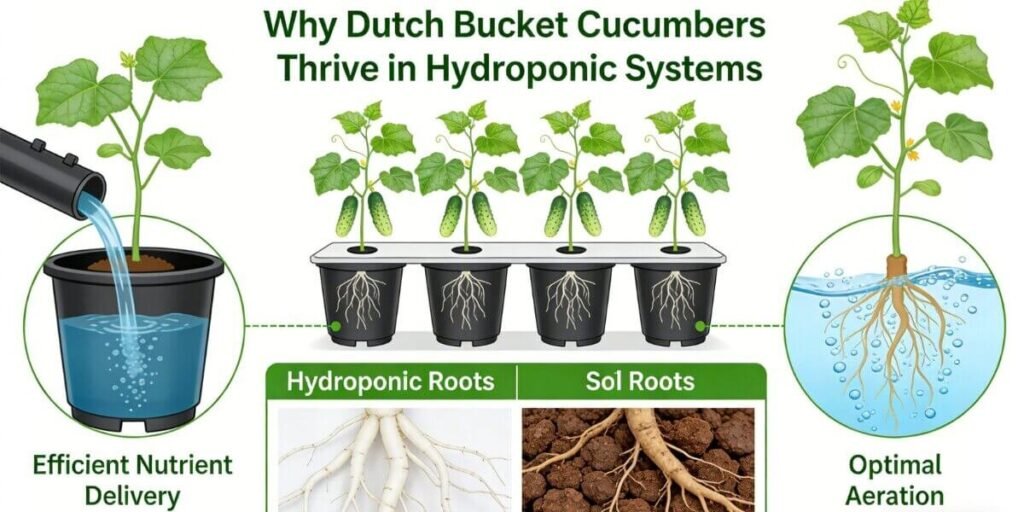
Strong Root Development in Dutch Bucket Hydroponics
Dutch Bucket systems provide deep, spacious containers that give cucumber roots ample room to grow and spread naturally. This unrestricted root development establishes a strong foundation, supporting the rapid vine growth that cucumbers are known for. Each bucket also features excellent drainage, preventing water from pooling and reducing the risk of root diseases such as root rot or fungal infections.
A healthy root system improves the plant’s ability to absorb water and essential nutrients efficiently, enhancing overall resilience. Well-developed roots help cucumbers withstand environmental stresses, maintain steady growth, and support stronger vines, ultimately leading to higher yields. For this reason, proper root care is a key component of successful Dutch Bucket hydroponic cucumber production.
Maximizing Fruit Yield for Hydroponic Cucumbers
Cucumbers are heavy-fruiting, fast-growing vining crops that require ample space and proper support to reach their full potential. Dutch Bucket systems provide an ideal solution by giving each plant its own container, which prevents overcrowding, reduces competition for light and nutrients, and allows vines to climb freely without tangling. In this controlled environment, roots can expand fully and stems can thicken, supporting vigorous growth and abundant fruit production.
These systems are also well-suited for other large fruiting crops, such as tomatoes, peppers, and eggplants. Proper spacing and individual containment help plants develop strong structural support, improve airflow around the foliage, and reduce the risk of diseases caused by high humidity or poor circulation. By ensuring each plant has enough room and consistent access to nutrients, Dutch Bucket systems promote healthier plants, higher yields, and more uniform fruit quality throughout the growing season.
Continuous Nutrient Supply for Healthy Cucumber Vines
One of the key advantages of Dutch Bucket hydroponics is the ability to deliver nutrients directly to plant roots through a controlled irrigation system. Each bucket provides a steady flow of nutrient-rich water, ensuring cucumber plants have continuous access to essential elements such as nitrogen, potassium, and calcium. This consistent supply supports vigorous vine growth, encourages abundant flower formation, and ultimately increases fruit yields.
Unlike soil-based systems, where nutrients can be unevenly distributed, washed away by rain, or locked in the soil, hydroponic irrigation creates a uniform and predictable nutrient environment. By reducing plant stress and preventing nutrient deficiencies, this precision allows cucumbers to grow quickly and consistently throughout the season. Continuous nutrient delivery also promotes even fruit size and uniform ripening. By maintaining a stable nutrient and moisture environment at the root zone, Dutch Bucket hydroponics produces healthier plants, supports higher yields, and ensures reliable, high-quality harvests for both commercial and home growers.
Understanding Vine Growth Patterns in Dutch Bucket Cucumbers
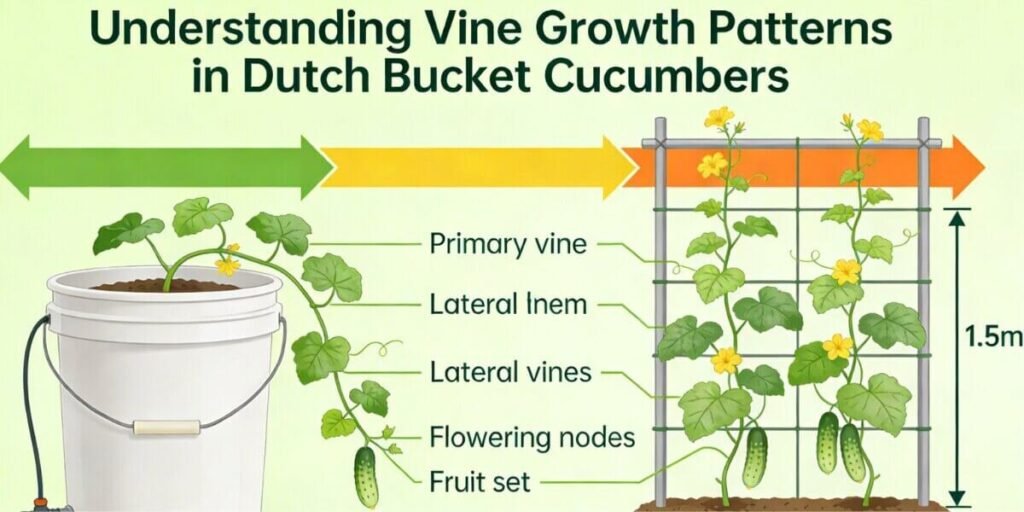
1. Seedling Stage for Dutch Bucket Systems
The seedling stage begins when cucumber seeds germinate and tiny plants first emerge. During this stage, seedlings develop their first true leaves and start forming a foundational root system to support future growth. Proper care at this early stage is critical, as it directly influences plant vigor and productivity later in the season.
Maintaining consistent moisture without waterlogging helps prevent root rot, while warm temperatures between 22 and 28°C (72–82°F) promote uniform germination and strong early growth. Providing gentle support, such as small stakes or netting, keeps seedlings upright without damaging delicate stems.
Light also plays a crucial role. Bright, indirect light or a properly adjusted LED grow light stimulates photosynthesis and encourages sturdy stem development. Once true leaves appear, a mild, balanced nutrient solution can be applied to enhance root health and prepare the seedlings for rapid vine growth.
By carefully managing moisture, temperature, light, and early nutrition, growers can establish strong seedlings that develop into vigorous, productive cucumber vines, setting the stage for a successful hydroponic harvest.
2. Vegetative Stage in Hydroponic Cucumbers
During the vegetative stage, cucumber vines grow rapidly, producing long stems and abundant leaves. This period is critical for training and supporting the vines. Unmanaged growth can lead to tangling, reduced airflow, and competition for light. Proper care during this stage lays the foundation for higher yields and easier maintenance later in the season.
Adequate light is essential. Cucumbers need bright, consistent illumination to drive photosynthesis and develop strong, healthy leaves. Balanced nutrients, including nitrogen, potassium, and calcium, support vigorous stem growth. They also prepare plants to carry heavy fruit loads during flowering and fruiting.
Space management plays a key role as well. Providing proper spacing, along with vertical supports, trellises, or netting, allows vines to climb efficiently. This improves airflow around the foliage and reduces the risk of fungal diseases. Regular pruning of excess lateral shoots directs energy toward the main stems and developing fruits. The result is stronger vines and more productive plants.
By combining sufficient light, balanced nutrition, well-planned support structures, and careful pruning, growers can cultivate healthy cucumber vines. These vines are sturdy enough to sustain heavy fruit production throughout the season.
3. Fruit Production Stage for Cucumber Vines
During the fruiting stage, cucumber plants shift their energy from vegetative growth to flower development and fruit set, making this period critical for achieving high yields and quality produce. Proper support is essential: using trellises, netting, or vertical ties keeps vines upright, prevents fruits from resting on the ground, and reduces the risk of physical damage, rot, or fungal infections.
Maintaining a steady nutrient supply is equally important. Cucumbers need adequate potassium and calcium to support healthy fruit development, while balanced nitrogen ensures continued leaf growth to nourish the fruits. Regular vine maintenance, including pruning excess lateral shoots and removing yellowing leaves, improves airflow, light penetration, and overall plant health.
Monitoring water levels and nutrient concentration helps prevent plant stress, which can otherwise lead to blossom drop or uneven fruit growth. By carefully managing support structures, nutrition, and ongoing plant maintenance, growers can produce consistent, high-quality harvests, with well-formed fruits that mature evenly throughout the season.
How Fast Hydroponic Cucumber Vines Grow
Cucumber vines grow extremely quickly, especially in well-managed Dutch Bucket systems where water, nutrients, and environmental conditions are carefully controlled. Under ideal conditions, vines can extend 5 to 10 centimeters per day, climbing trellises, support strings, or other vertical structures. This rapid growth creates a dense canopy of leaves that enhances photosynthesis and sustains continuous fruit production.
During a single growing season, cucumber vines can reach 2 to 4 meters in length, depending on variety, light intensity, nutrient levels, and overall environmental conditions. Some high-yielding greenhouse varieties may grow even longer when properly trained.
Because of this fast growth, timely vine training and support are essential. Guiding vines upward prevents overcrowding, improves airflow around the foliage, and ensures developing fruits receive sufficient light. Effective vine management also simplifies pruning, pollination, and harvesting, resulting in healthier plants and more consistent yields throughout the season.
Managing Tendrils and Climbing Behavior
Cucumber vines have specialized structures called tendrils that allow them to climb and attach naturally to nearby supports. These thin, flexible tendrils emerge from the nodes along the vine and are highly sensitive to touch. When they come into contact with a structure such as a string, trellis, or netting, they coil tightly around it, anchoring the plant and supporting vertical growth while preventing vines from sprawling across the ground.
Understanding how cucumber tendrils function is essential for effective vine training in hydroponic systems like Dutch Buckets. By providing proper vertical supports, growers can guide vines upward in an organized manner, improving light exposure for leaves, enhancing airflow around the canopy, and reducing humidity that can lead to fungal diseases.
Elevating the vines also keeps fruits off the growing medium, reducing the risk of rot, pests, and contamination. Properly supported cucumber plants produce cleaner, healthier fruits and maintain higher productivity throughout the growing season, ensuring consistent yields and quality harvests.
Choosing the Best Trellis for Hydroponic Cucumbers
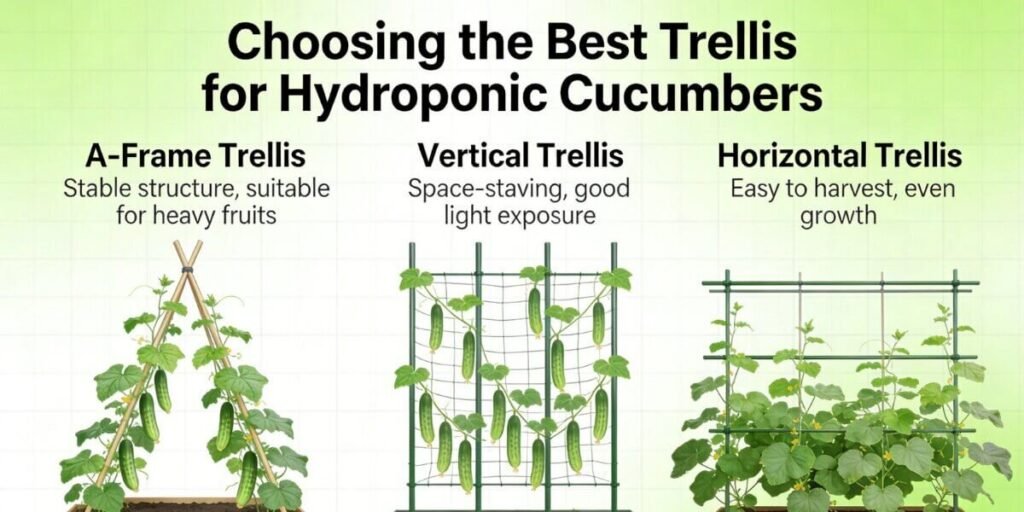
Vertical String Trellis Options
The vertical string trellis is one of the most popular support systems for cucumber vines, especially in commercial greenhouses and Dutch Bucket hydroponic setups. It typically consists of an overhead wire above the plants, with individual strings hanging down to guide each vine upward.
This system simplifies vine training by allowing each plant to follow its own string, keeping vines organized and easy to manage. Vertical training improves light exposure, enhances airflow around the leaves, and reduces humidity that can lead to fungal diseases.
Elevating the vines also protects developing fruits from rot and physical damage, while the vertical structure makes pruning and harvesting more efficient. By using a vertical string trellis, growers can maintain healthy plants, optimize vine growth, and achieve more consistent, high-quality yields throughout the season.
Trellis Netting for Optimal Support
Trellis netting is a simple and effective support option for cucumber vines, particularly suited for backyard growers and outdoor hydroponic systems. The netting provides a flexible climbing structure that allows cucumber tendrils to attach naturally, keeping vines upright and organized as they grow rather than sprawling across the ground.
One major advantage of trellis netting is its affordability, making it ideal for small-scale growers and home gardens. It is also easy to install, typically requiring only a basic frame or supporting posts. Guiding vines vertically with netting improves light exposure, enhances airflow around the foliage, and reduces the risk of fungal diseases.
Elevating the vines also protects developing cucumbers from rot, pests, and physical damage. Vertical growth simplifies maintenance, pruning, and harvesting, helping growers maintain healthier plants and produce higher-quality fruits throughout the season.
Frame or Cage Structures for Vine Management
Frame or cage support is a practical option for training cucumber vines in small hydroponic systems, container gardens, or hobby setups. These supports are often made from PVC, metal, or wood, forming a sturdy structure around each plant. The frame guides vines as they grow upward and outward, keeping plants upright while supporting stems and developing fruits.
This method keeps cucumber vines off the ground. Elevating the vines improves airflow around foliage, increases light exposure, and reduces the risk of diseases caused by excess moisture. It also protects developing cucumbers from soil contact, pests, and physical damage, resulting in cleaner and healthier fruits.
Frame or cage supports are easy to assemble and require only basic materials. This makes them ideal for home growers who want a simple and durable training system. The open structure allows plants to grow naturally while keeping the growing area organized. It also makes routine tasks such as pruning, monitoring plant health, and harvesting cucumbers easier throughout the season.
Step-by-Step Guide to Training Dutch Bucket Cucumbers
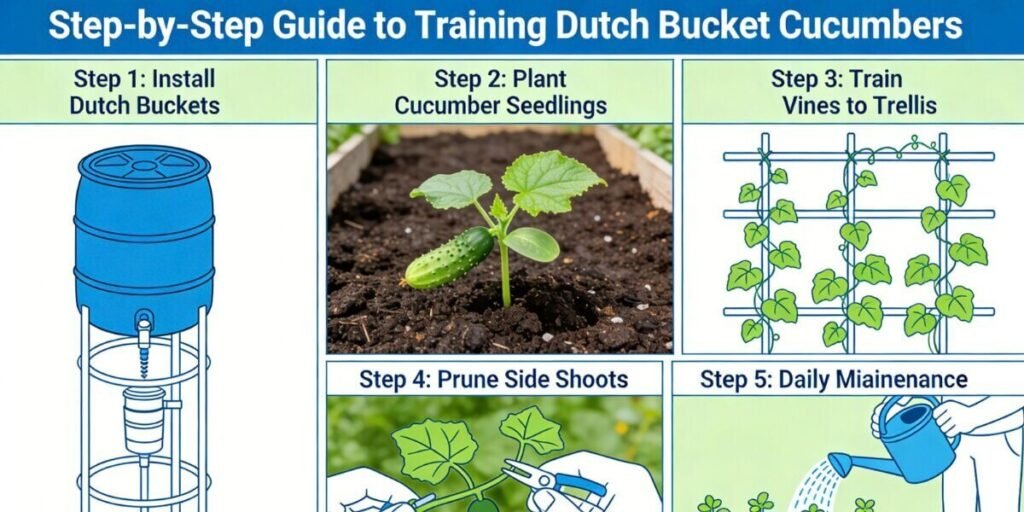
Step 1: Install Support Before Vines Grow Tall
Before cucumber vines begin climbing, it is crucial to install a strong and stable support structure. Setting up supports early allows vines to grow upward naturally and prevents them from sprawling across the growing area. In hydroponic systems such as Dutch Bucket setups, this typically involves installing an overhead wire, trellis, or support bar at a height of 1.8 to 2.2 meters, with support strings, clips, or netting attached to guide each plant as it grows.
Installing the support system before plants become tall makes vine training much easier. Young cucumber plants can be gently directed toward the support from the start, helping maintain straight, organized growth and preventing bending, tangling, or breakage as vines grow rapidly.
A properly installed support structure also enhances overall plant management. By keeping vines vertical, it increases light exposure to the leaves, promotes better airflow around the canopy, and creates a stable framework for healthy vine development. Early preparation ensures stronger plants and supports higher yields throughout the growing season.
Step 2: Secure the Plant Base
Once cucumber seedlings are well established and have developed several true leaves, it is important to gently attach the base of each vine to its support. Plant clips, soft ties, or hydroponic vine clips can be used for this purpose. The stem should be secured near the support string or trellis, allowing the plant to begin climbing in the correct direction.
When attaching the vine, make sure the ties are loose enough to accommodate stem expansion as the plant grows. Securing the base early provides stability and helps guide the cucumber vine upward during its rapid growth phase, ensuring organized, vertical growth and reducing the risk of bending or tangling.
Step 3 Guide the Vine Upward
Cucumber vines grow rapidly during the vegetative stage, so regular guidance is essential to maintain organized growth. Check the plants every two to three days and gently wrap the main stem around the support string or guide it along the trellis. Keeping the vine aligned with its support ensures straight, vertical growth and prevents tangling with neighboring plants.
Consistent training also improves light exposure for the leaves and enhances airflow around the canopy, creating a healthier growing environment. By guiding cucumber vines carefully during this stage, growers can support vigorous growth, reduce disease risk, and set the foundation for a productive, high-yielding crop.
Step 4: Remove Lower Leaves for Better Airflow
As cucumber vines grow taller, it is important to gradually remove older leaves near the base of the plant. These lower leaves often receive less light and can trap moisture around the stem, creating conditions favorable for fungal diseases. By pruning them, airflow around the lower portion of the plant improves, reducing disease risk and promoting a healthier growing environment.
This simple pruning practice also allows the plant to direct more energy toward developing stronger stems, healthy foliage, and productive fruit clusters higher up the vine. Regular removal of lower leaves not only supports vigorous vine growth but also contributes to higher yields and better-quality cucumbers throughout the season.
Step 5: Prune Side Shoots for Increased Fruiting
In many hydroponic cucumber systems, growers regularly prune lower side shoots, also known as suckers, to maintain a clean and organized plant structure. Removing these excess shoots encourages the plant to focus its energy on the main vine and fruit production, resulting in stronger, healthier growth.
Pruning side shoots also prevents overcrowding within the canopy, ensuring that each plant receives adequate light and nutrients. Consistent maintenance of the main vine supports vigorous growth, improves fruit quality, and simplifies plant care and harvesting throughout the growing season.
Advanced Cucumber Vine Training Techniques in Greenhouses
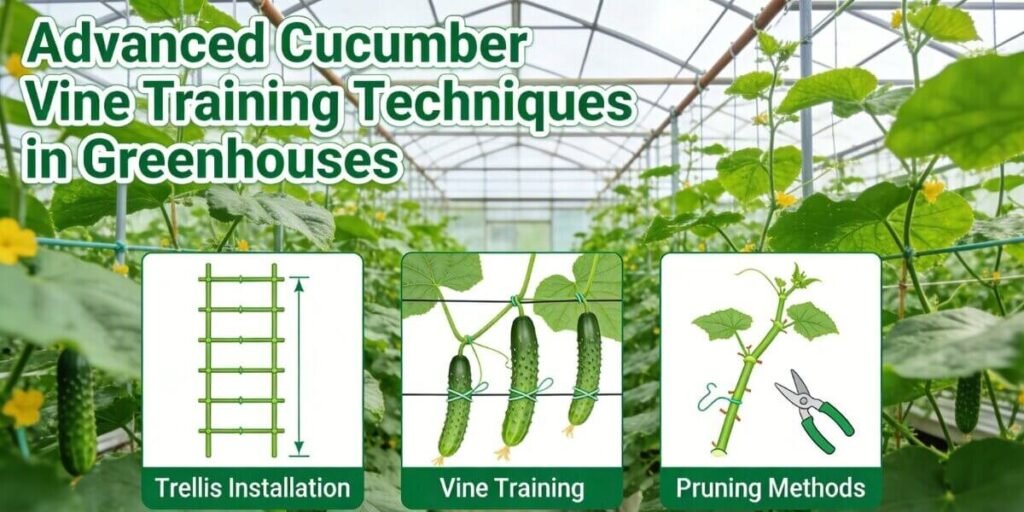
Lower and Lean Method for Hydroponic Cucumbers
In commercial greenhouses, cucumber vines can grow very long, often reaching the top of the support structure. To manage this growth and extend the plant’s productive life, many growers use the Lower and Lean technique, which allows vines to continue producing fruit without cutting the main stem or replacing the plant.
When the vine reaches the top support wire, the grower carefully lowers it by releasing a small portion of the support string. The upper section is then gently leaned or repositioned along the row, creating additional vertical space for new growth while keeping the older portion closer to the base. This adjustment enables the upper part of the vine to keep growing upward, maintaining continuous growth and fruit production for several months.
Repeating the Lower and Lean process over time also improves light distribution throughout the canopy and enhances airflow around the leaves. As a result, cucumber plants remain healthier, easier to manage, and capable of producing consistent, high-quality harvests throughout a long growing season.
Single Stem Training for Maximum Yield
Single Stem Training is a common technique in professional greenhouses for managing cucumber vines. In this method, growers keep only the main vine and regularly remove lower side shoots or lateral branches. Focusing on a single stem helps the plant develop a clear vertical structure that is easier to guide along support strings or trellises.
This method improves airflow around leaves and stems, which reduces humidity and lowers the risk of fungal diseases. It also prevents overcrowding in the canopy, allowing each leaf to receive adequate light for photosynthesis. With fewer side shoots competing for nutrients, the plant directs more energy to strengthening the main stem and producing healthy flowers and fruits.
Single Stem Training also simplifies maintenance in hydroponic systems such as Dutch Buckets. Pruning, monitoring plant health, and harvesting become easier because the vines are organized and accessible. This technique helps maintain steady growth, improves fruit quality, and supports consistent yields throughout the season.
Environmental Conditions That Help Cucumber Vine Training
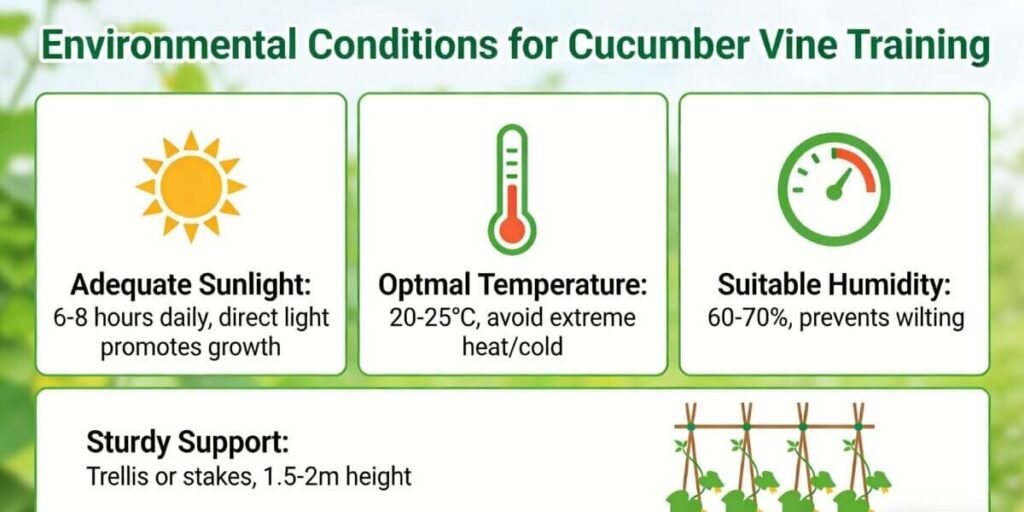
Ideal Temperature for Dutch Bucket Cucumbers
Cucumber vines grow best in a moderate temperature range of 20 to 28°C, which supports photosynthesis and promotes strong, vigorous growth. Maintaining stable temperatures is especially important in greenhouse or indoor hydroponic systems like Dutch Buckets, where plants respond quickly to environmental fluctuations.
Temperatures below 20°C can slow metabolism, reduce nutrient uptake, and stunt vine growth, while heat above 28°C can stress plants, cause leaf wilting, and negatively affect flower formation and fruit set. Consistent temperature control ensures steady vegetative growth, uniform flowering, and the production of healthy, high-quality cucumbers.
In controlled environments, growers can use thermostats, ventilation, shading, or heating units to maintain optimal climate conditions. By keeping temperatures within the ideal range, cucumber plants grow faster, stay healthier, and produce higher yields throughout the growing season.
Light Requirements for Hydroponic Vine Training
Cucumbers require ample light to support vigorous vine growth, healthy foliage, and abundant fruit production. The optimal light exposure for cucumber plants is 12 to 16 hours per day, which ensures efficient photosynthesis and steady growth. In indoor hydroponic systems such as Dutch Buckets, strong full-spectrum LED or fluorescent lights provide energy across all wavelengths, promoting healthy leaves, robust stems, and long, productive vines.
Proper light management helps prevent common issues like leggy growth, weak stems, or uneven fruiting. Consistent, well-distributed light encourages uniform leaf development, enhances flowering, and supports higher fruit set. Growers should position lights at the correct distance and adjust intensity based on plant size and growth stage to maximize light absorption without causing leaf burn.
By providing sufficient, high-quality light throughout the growing season, cucumber plants maintain strong vegetative growth, improved photosynthesis, and healthier vines, resulting in higher, more consistent yields.
Maintaining Optimal Humidity Levels
Maintaining proper humidity is essential for healthy cucumber vines, particularly in greenhouse or indoor hydroponic systems like Dutch Buckets. The ideal relative humidity for cucumber plants ranges from 60 to 75 percent, which helps them retain moisture, prevents excessive transpiration, and supports critical processes such as nutrient uptake and photosynthesis.
Proper humidity management also plays a key role in disease prevention. Excessively high humidity creates a damp environment that encourages fungal infections like powdery and downy mildew, while too low humidity stresses plants, leading to leaf wilting and slower growth. Combining appropriate humidity levels with good airflow improves ventilation, reduces condensation, and maintains a healthier microclimate around the plants.
Careful control of humidity promotes strong stems, lush foliage, and consistent flowering and fruiting. By maintaining this balance, growers can reduce plant stress, enhance cucumber quality, and maximize yields throughout the growing season.
Nutrient Tips for Healthy Hydroponic Cucumber Vines
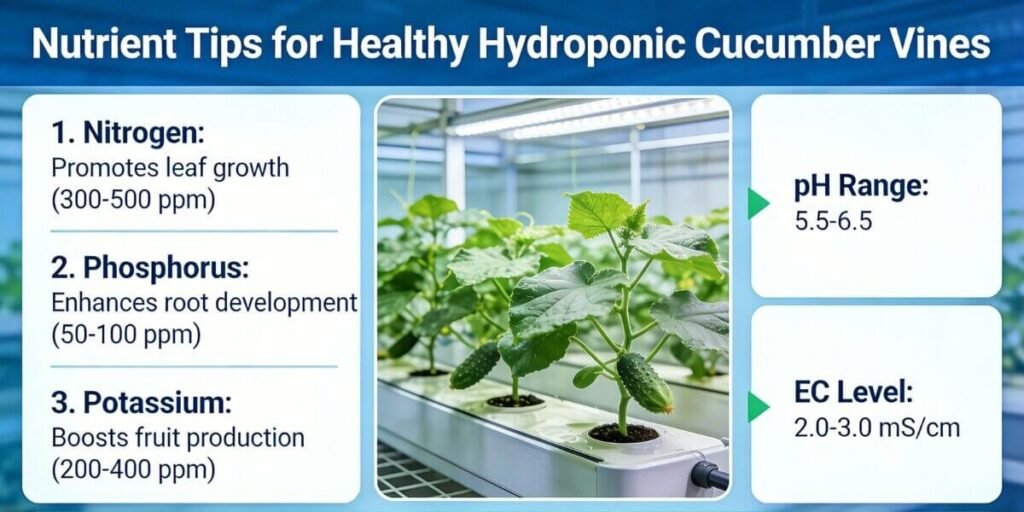
Cucumbers are heavy feeders and require a balanced supply of nutrients to support vigorous vine growth and abundant fruit production.
Essential Nutrients for Dutch Bucket Cucumbers
- Nitrogen (N): Essential for leaf development and overall vegetative growth. Healthy leaves capture more light, which drives photosynthesis and strengthens the vine.
- Potassium (K): Promotes flower and fruit development, ensuring cucumbers grow plump, firm, and flavorful.
- Calcium (Ca): Strengthens stems and cell walls, helping vines support the weight of the fruit and reducing the risk of blossom end rot.
Monitoring Water and Nutrient Levels in Hydroponic Systems
Monitoring water and nutrient levels is critical for successful cucumber growth in hydroponic systems. In addition to providing balanced nutrients, growers should regularly check electrical conductivity (EC) and pH levels. Maintaining the correct EC ensures that plants receive the proper concentration of nutrients, while keeping pH within the optimal range maximizes nutrient uptake and prevents deficiencies.
Consistent monitoring of water and nutrient conditions helps cucumber vines stay healthy, supports vigorous vine growth, and contributes to higher, more reliable yields. By carefully managing EC and pH, growers can create a stable root environment that promotes overall plant health and productivity in Dutch Bucket hydroponic systems.
Common Issues When Training Hydroponic Cucumbers
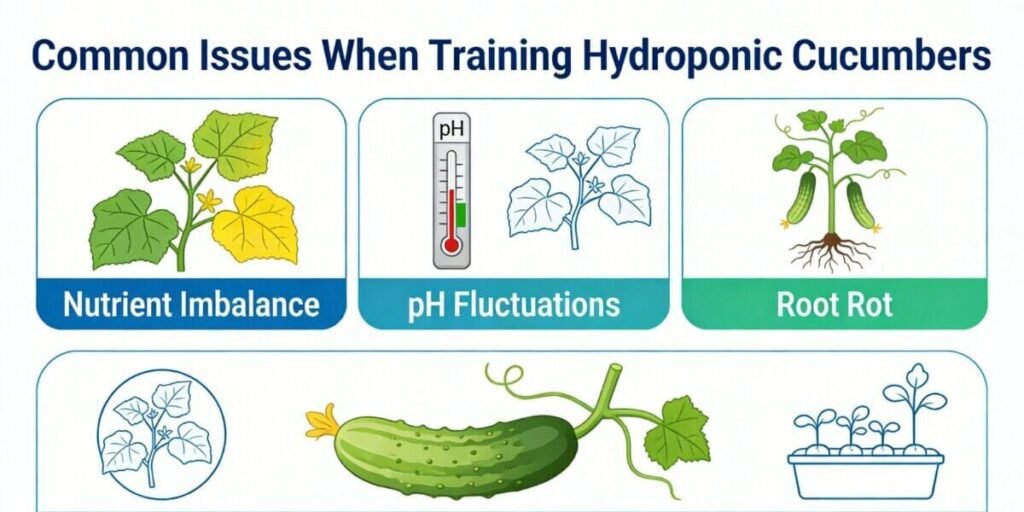
Problem 1: Broken Vines and How to Fix Them
Cucumber vines are delicate and require careful handling to avoid damage. Forcing a vine in the wrong direction or tying it too tightly to a support structure can cause stem breaks or injuries, which may permanently affect growth and fruit production.
To prevent this, guide the vines gradually along strings, trellises, or netting, allowing the tendrils to attach naturally. Gentle handling during both vine training and pruning helps maintain strong, healthy stems, reduces stress on the plant, and minimizes the risk of damage that could limit fruit development or lower overall yields. By training cucumber vines carefully, growers can ensure organized, vertical growth and maximize productivity throughout the growing season.
Additionally, using the right hydroponic system can make vine training easier and more effective. If you’re unsure which system to choose, see our Dutch Bucket vs DWC comparison.
Problem 2: Overcrowding and Poor Airflow
Overcrowding in cucumber crops occurs when plants are grown too close together or when side shoots and lateral growth are not pruned regularly. This dense growth reduces airflow, increases humidity around the foliage, and creates ideal conditions for fungal diseases such as powdery mildew and downy mildew.
To prevent overcrowding, maintain proper spacing between plants and perform routine pruning to remove excess leaves or side shoots. Keeping the canopy organized allows better light penetration, promotes healthier leaf and stem development, and supports stronger vine growth. By managing plant density effectively, growers can reduce disease risk, maintain vigorous cucumber vines, and achieve higher, more consistent yields throughout the growing season.
Problem 3: Weak Vine Structure
Weak or spindly cucumber vines often struggle to support developing fruits, which can lead to poor fruit quality or even stem breakage. This issue is commonly caused by insufficient light, inadequate airflow, or nutrient imbalances, such as low levels of calcium or potassium in the hydroponic solution.
To strengthen the vines, growers should provide adequate full-spectrum lighting, ensure proper ventilation, and maintain a balanced nutrient supply. These measures promote robust stem development, improve overall vine structure, and increase resilience. Healthy, well-supported cucumber vines are better able to sustain heavy fruit loads, resulting in higher-quality fruits and more consistent yields throughout the growing season.
Maintenance Checklist for Dutch Bucket Cucumber Systems
| Task | Status | Notes |
|---|---|---|
| Check vine support | ⬜ | e.g., stakes, trellis condition |
| Guide vines upward | ⬜ | adjust ties if needed |
| Remove yellow leaves | ⬜ | check for nutrient issues |
| Inspect irrigation system | ⬜ | leaks, blockages |
| Monitor pests and diseases | ⬜ | note any signs |
Frequently Asked Questions About Dutch Bucket Cucumber Training
Yes! Even in hydroponics, cucumbers are climbing plants. Giving them support keeps the vines off the ground, lets air and light reach all parts of the plant, and usually means bigger, healthier fruits.
Most growers go for a vertical string trellis. It’s simple, saves space, and makes guiding the vines much easier. Plus, harvesting becomes way more convenient.
During fast growth, check your plants every 2–3 days. Gently guide the new shoots up the strings so they don’t get tangled or break.
With good care, they can grow really long up to 3–4 meters! So make sure your trellis is tall enough to handle that.
Absolutely. Dutch buckets work fine outdoors or in a greenhouse, as long as you give the plants solid support and steady irrigation.
Summary: Successful Hydroponic Cucumber Training Tips
Training and supporting cucumber vines is crucial for maximizing productivity in hydroponic systems, especially in Dutch Bucket setups. Proper vine management encourages vertical growth, which optimizes space usage, improves light distribution, and ensures that each leaf receives sufficient energy for photosynthesis. Regular attention to vine training also enhances airflow around the plants, reducing humidity and minimizing the risk of fungal diseases and other common plant issues.
By guiding cucumber vines along a reliable trellis, string, netting, or frame support and performing consistent pruning and maintenance, growers can strengthen stems, protect developing fruits, and maintain a clean, organized growing area. This careful management promotes healthier plants, increases flower and fruit set, and ultimately leads to higher-quality cucumbers. With the right support system and diligent care, hydroponic cucumber plants can remain productive and healthy for several months, delivering abundant harvests while making monitoring, maintenance, and harvesting easier for growers.
Start Training Your Hydroponic Cucumbers Today
Ready to grow cucumbers in your own hydroponic system? 🥒
Training and supporting your cucumber vines is key to getting the most out of a Dutch Bucket setup. By guiding your vines vertically and maintaining them regularly, you can:
- Make the most of your growing space
- Improve airflow around the plants
- Reduce the risk of disease
- Increase your cucumber yield
With the right trellis system and consistent vine care, Dutch Bucket cucumbers can stay healthy and productive for months.
Start with a reliable setup and proper vine training techniques to achieve professional-level results. At GreenFuture Hydroponics, we provide practical hydroponic growing knowledge, system guidance, and all the accessories you need to build a stable, efficient production setup.
📩 info@greenfuturehydro.com
📞 +86 13487543942
📷 Instagram @Greenfuturehydro
Follow us for more hands-on hydroponic tips and guidance, or reach out to find the right equipment and setup for your cucumber (or pepper 🌶️) production goals.