
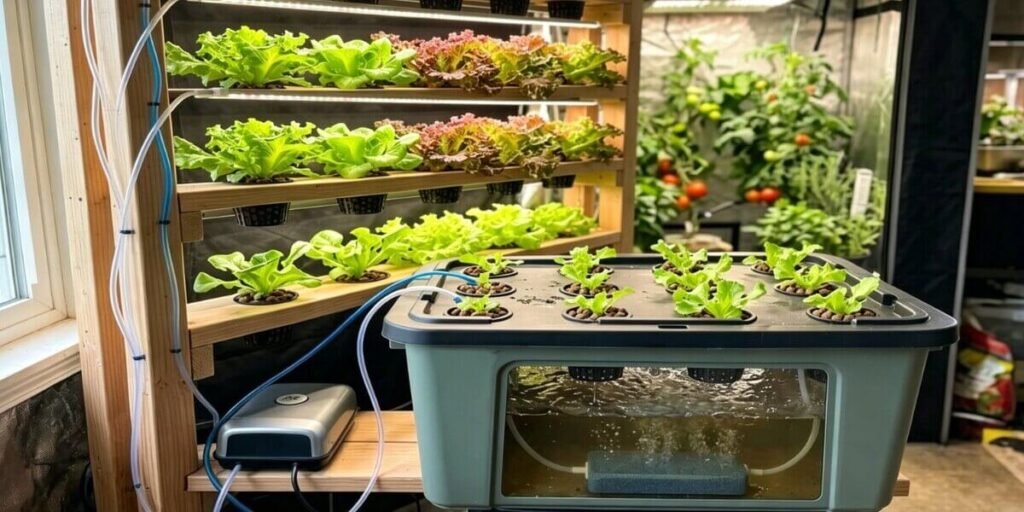

DWC hydroponics is one of the simplest hydroponic methods to start with, especially if you already understand the basics of growing without soil. In this system, plant roots grow directly in oxygenated nutrient water, giving them steady access to water, nutrients, and oxygen.
In this guide, we will look at how DWC hydroponics works, which plants grow well in the system, and whether it is a good choice for beginners.
What Is Deep Water Culture (DWC)?
Deep Water Culture, or DWC, is one of the simplest hydroponic systems for beginners. Instead of growing in soil, plant roots sit directly in a nutrient rich water solution while an air pump continuously adds oxygen to the water. This gives the roots easy access to water, nutrients, and oxygen for healthy growth.
A basic DWC system includes a container, nutrient solution, air pump, air stone, and net pot. The plant sits above the water while its roots grow downward into the oxygenated solution. With no soil or complex irrigation system to manage, DWC offers a simple and effective way to start growing hydroponically.
Simple DWC structure:
Plant
  ↓
Net Pot
  ↓
Root System
  ↓
Oxygenated Nutrient Water
With its simple design and minimal equipment, DWC is one of the easiest hydroponic systems for beginners to set up and understand. The setup is straightforward, but keeping the water level, oxygen supply, and nutrient balance in check is essential for healthy plant growth.
How Does DWC Work?
A Deep Water Culture system is actually pretty simple once you see how the pieces work together. The plant sits above a container filled with nutrient solution, and its roots grow down into the water. An air pump and air stone keep the solution oxygenated while the roots take in water and nutrients.
That is really the basic idea behind DWC. There is no complicated water flow or large amount of equipment to figure out. The main job is keeping the root zone in good condition as the plant grows.
Your Plants Grow Directly in Water
In a DWC system, the roots have direct access to water and dissolved nutrients instead of having to grow through soil to find them.
This can make a noticeable difference in how quickly plants grow. When the nutrient solution is balanced and the roots are healthy, the plant has a steady supply of water and nutrients right where it needs them.
You will usually see the roots grow down from the net pot and into the reservoir as the plant develops. The white, healthy root growth is one of the most satisfying parts of growing in DWC.
Why Plants Still Need Plenty of Oxygen
This is the part that can seem strange when you are new to hydroponics. If the roots are sitting in water, why do they not simply rot?
The answer is that the water needs oxygen.
An air pump sends air into the reservoir through an air stone. The bubbles keep the nutrient solution moving and add dissolved oxygen around the roots. This gives the roots access to the oxygen they need for healthy growth.
Without enough oxygen, a DWC reservoir can quickly become a poor environment for roots. That is why a reliable air pump and air stone are so important.
How Nutrients Reach the Roots
The water in the reservoir is not plain water. It contains the nutrients the plant needs to grow.
As the plant takes up water, it also absorbs nutrients through its roots. The strength of the nutrient solution needs to be appropriate for the plant and its stage of growth, so checking the solution regularly is part of normal DWC maintenance.
The water level also changes as plants grow and consume water. Keeping an eye on the reservoir helps prevent the roots from being exposed or the water level from getting too high.
Why Does DWC Hydroponics Work So Well?
There is no secret trick behind DWC. It works because the roots have access to three things they constantly need: water, nutrients, and oxygen.
The system itself is simple. Keeping those three things in balance is where most of the attention goes.
From our experience working with hydroponic growers, beginners usually have the easiest time with DWC when they focus on the root zone rather than trying to constantly adjust everything else. Keep the water clean, provide plenty of aeration, monitor the nutrient solution, and check the plants regularly.
Once you get used to those few habits, a DWC system is surprisingly easy to manage.
What Do You Need to Set Up DWC?
One of the nice things about DWC is that you do not need a lot of equipment to get started. A basic setup usually includes a reservoir, net pot, air pump, air stone, growing medium, and hydroponic nutrients.
The setup is simple, but each part has an important job. The roots sit in the nutrient solution, while the air pump keeps oxygen moving through the water.
Reservoir
The reservoir is simply the container that holds the nutrient solution. For a small home setup, this might be nothing more than a bucket with a lid.
As the plants grow, they will use both water and nutrients, so the reservoir needs to be checked regularly. Keeping the water clean and at a suitable level is one of the basic things to stay on top of with DWC.
Net Pots
The net pot holds the plant above the reservoir and gives the roots room to grow down into the nutrient solution. Because the sides and bottom are open, the roots can easily grow through the pot.
Clay pebbles are often used inside the net pot to support the plant while it is getting established. They are lightweight and do not hold as much water around the stem as some other growing media.
Air Pumps and Air Stones
The air pump is an important part of any DWC setup. It pushes air through the air stone, creating bubbles that help add oxygen to the nutrient solution.
This matters because the roots are sitting in water all the time. Without enough oxygen, the root zone can quickly become a problem. For a small home system, a basic air pump that provides steady aeration is usually enough.
Growing Medium
DWC does not use soil, but the plant still needs something to keep it upright. Clay pebbles are a popular choice, although other hydroponic growing media can also work.
The main goal is to support the plant without holding too much moisture around the stem. You want the roots to have plenty of access to both water and air as they grow.
Hydroponic Nutrients
Since there is no soil in DWC, the plants get their nutrients directly from the water. A hydroponic nutrient solution supplies the minerals they need for healthy growth.
The amount you use will depend on the plant and its growth stage. It is usually better to follow the instructions provided with the nutrients rather than assuming more nutrients will make the plants grow faster.
What Can You Grow in DWC?
DWC works especially well for plants that grow relatively quickly and do not need a lot of space for their roots. That is why leafy greens and herbs are usually the first plants beginners try. They are easy to manage, grow quickly, and you can often start harvesting without waiting for months.
Leafy Greens and Herbs
If this is your first DWC setup, it is usually better to start with plants that grow quickly and do not need much space. Leafy greens and herbs are especially forgiving, so you can get familiar with checking the water, nutrients, and roots without having too much to manage at once.
| Plant Type | Examples | Why They Work Well in DWC |
|---|---|---|
| Lettuce | Butterhead, Romaine, Leaf lettuce | Grows quickly, stays fairly compact, and does not need much support |
| Herbs | Basil, Mint, Cilantro | Easy to grow in a small setup and useful for regular kitchen harvests |
| Leafy Greens | Kale, Spinach, Arugula | Adapt well to hydroponic growing and can provide repeated harvests |
Plants That Need More Experience
DWC can also be used for tomatoes and peppers, but these crops are a different story once they start getting bigger. Their root systems take up more space, and the plants can become heavy when they are carrying fruit.
If you want to grow them, you will usually need:
- A larger reservoir to give the roots enough room
- Strong plant support to keep tall stems and heavy fruit from tipping over
- More frequent attention to water and nutrient levels
- Good lighting to support flowering and fruit production
That does not mean tomatoes and peppers are off limits for beginners. They simply give you more things to keep track of. Starting with lettuce, basil, or another leafy green can make the first DWC experience much easier. Once you get comfortable with the basics, growing larger fruiting plants becomes much less intimidating.
How DWC Compares With Other Hydroponic Systems
There are plenty of ways to grow without soil, and DWC is just one of them. The good thing is that you do not need to pick the “best” system. You just need one that makes sense for your plants and your space.
| Hydroponic System | A Good Fit For |
|---|---|
| DWC | Lettuce, herbs, and small home gardens |
| NFT | Leafy greens and larger numbers of plants |
| Vertical Tower | Balconies, patios, and tight spaces |
| Aeroponics | Growers who want to try something more advanced |
For someone growing a few plants at home, DWC is hard to make overly complicated. A bucket, an air pump, and some nutrients can take you surprisingly far.
Other systems have their own advantages. NFT is useful when you want to grow more plants in rows, while a vertical tower makes better use of limited floor space. Aeroponics is a different level altogether and usually makes more sense once you already have some hydroponic experience.
For a first DWC project, though, keeping things simple is usually the way to go.
What Are the Pros and Cons of DWC?
DWC has a lot going for it, especially if you are new to hydroponics. The setup is simple, the plants can grow quickly, and there is not much equipment to deal with.
But there is one catch. Because the roots are sitting in water, you cannot really ignore the system for days at a time.
Advantages
| What You Get | Why It Is Nice |
|---|---|
| Simple setup | You only need a few basic parts to get a small system running. |
| Quick growth | Plants have constant access to water and nutrients, with plenty of oxygen around the roots. |
| Less equipment | There are no complicated pipes or multiple pumps in a basic DWC setup. |
Things to Keep in Mind
| What Can Go Wrong | What to Watch |
| Low oxygen | If the air pump stops or the water is poorly aerated, the roots can suffer quickly. |
| Warm water | Hot nutrient solution contains less oxygen, which can make the root zone harder to manage. |
| Nutrient changes | Plants use water and nutrients as they grow, so the reservoir needs regular attention. |
So, is DWC easy? Yes. Is it something you can completely forget about? Not really.
The good news is that there are only a few things to keep track of. Keep the roots oxygenated, check the water regularly, and pay attention to how the plants look. For many beginners, that is a pretty manageable way to get started with hydroponics.
Why DWC Is Popular With Beginners
For a first hydroponic project, DWC is hard to beat. You can start with one bucket, a small air pump, and a plant or two without building a complicated system.
What makes DWC especially nice for beginners is that you can actually see what is going on. Check the water, take a look at the roots, watch the leaves, and you will start to notice how the plants respond when something changes.
DWC is a good choice if you:
| If You… | DWC Can Be a Good Fit |
|---|---|
| Are growing at home | A small bucket can be enough to get started |
| Want to learn hydroponics | The basic relationship between water, nutrients, and oxygen is easy to see |
| Like checking on your plants | You can quickly spot changes in the roots, water, or leaves |
The one thing to keep in mind is that DWC is not completely hands off. You still need to check the water level, keep the air pump running, and pay attention to nutrient strength and root health.
If you want to grow a few herbs or lettuce at home, DWC is a simple way to get your feet wet without investing in a complicated hydroponic setup. Once you get comfortable with it, you can always move on to NFT, vertical towers, or other systems later.
Frequently Asked Questions
DWC is one of the simplest hydroponic systems to start with because it has fewer components and a straightforward setup. However, beginners still need to learn basic water, nutrient, and oxygen management.
Yes. The air pump provides oxygen to the nutrient solution through an air stone. Continuous oxygen supply is essential for keeping DWC roots healthy.
Most beginners start with lettuce, basil, and other leafy greens because they grow quickly and require less support. Larger plants like tomatoes and peppers need more experience.
Yes, tomatoes can grow well in DWC, but they require more space, stronger support, and careful nutrient management compared with leafy greens.
For small home growers, DWC is often easier to understand and manage. NFT is commonly preferred for larger-scale leafy green production.
Conclusion: Is DWC Hydroponics Right for You?
DWC hydroponics is one of the easiest ways to get started with hydroponic gardening. The setup is simple, and because the roots sit directly in the nutrient solution, you can easily see how water, oxygen, and nutrients affect plant growth.
That does not mean DWC is completely hands off. You still need to keep the water well oxygenated and pay attention to water quality and nutrient levels. Once you get those basics right, DWC can be a simple and enjoyable way to grow plants without soil and learn the fundamentals of hydroponics.
Explore Hydroponics Solutions from Greenfuture Hydro
Whether you are starting a small home garden or planning a commercial growing project, Greenfuture Hydro provides reliable hydroponic solutions designed for different growing needs.
Our solutions include:
- Home hydroponic systems for beginners and indoor growers
- Commercial hydroponic solutions for farms and growing projects
- Customized hydroponic setups based on specific requirements
With years of experience in hydroponic system design and manufacturing, Greenfuture Hydro helps growers select the right solution based on their space, crops, and production goals.
📩 info@greenfuturehydro.com
📞 +86 13487543942
📷 Instagram @Greenfuturehydro