
Growing fresh vegetables at home does not always require a large backyard, gardening experience, or hours of daily maintenance. A home hydroponic garden allows beginners to grow herbs, leafy greens, and vegetables in apartments, balconies, kitchens, and indoor spaces using water, nutrients, and controlled growing conditions instead of traditional soil.
In this guide, we will explain how to start a home hydroponic garden, including the essential equipment you need, how to choose the right system, how to prepare your growing space, and the basic steps for maintaining healthy plants.
At Greenfuture Hydro, we have been designing and manufacturing hydroponic systems since 2015. We help home growers, schools, and commercial farms find practical growing solutions based on their space, crops, and growing goals.
Everything You Need to Start a Home Hydroponic Garden
One of the best things about starting a home hydroponic garden is that you do not need a lot of equipment. Many beginners think they need a complicated setup, but a simple system with the right basics is often the best place to begin.
Before buying extra tools, focus on the essentials your plants need to grow well. These include a reliable hydroponic system, enough light, proper nutrients, and a way to check your water conditions.
As you gain experience, you can add more equipment based on your plants and growing goals. Starting simple makes it easier to learn, solve problems, and enjoy growing at home.
Essential Equipment for Your Home Hydroponic Garden
| Equipment | Why You Need It |
|---|---|
| Hydroponic system | Holds your plants and provides a place for roots to receive nutrient solution |
| Grow lights | Provides the light plants need when natural sunlight is not enough |
| Hydroponic nutrients | Gives plants the minerals they normally get from soil |
| pH meter | Helps you check if your plants can absorb nutrients properly |
| EC meter | Helps measure nutrient strength and keep the solution balanced |
| Seeds or seedlings | Gives you a starting point for your first growing cycle |
| Growing media | Supports young plants and keeps roots in place |
For most beginners, these items are enough to start growing herbs, leafy greens, and other easy hydroponic crops at home.
Optional Tools That Can Make Hydroponic Growing Easier
The essential equipment is usually enough for most beginner hydroponic gardens. However, a few extra tools can make daily care easier and help keep growing conditions more consistent.
| Equipment | Why You Might Need It |
|---|---|
| Timer | Automates grow lights and helps maintain a consistent lighting schedule for plants |
| Water pump | Keeps nutrient solution moving in systems that require water circulation |
| Air pump | Adds oxygen to the water and supports healthier root conditions in certain hydroponic systems |
| Temperature monitor | Helps track growing conditions and identify temperature changes that may affect plant growth |
The right equipment depends on your growing space, plant choices, and hydroponic system type. Beginners do not need the most advanced setup to get started. A simple and reliable system with the essential tools is usually the best way to learn hydroponic gardening and improve over time.
How to Choose Hydroponic System for Your Home
Choosing your first hydroponic system does not have to be complicated. The best choice is the one that fits your home, space, and growing goals. Before you decide, think about where you will place your garden. Consider how much you want to grow and how much time you can spend on care.
Desktop Hydroponic Garden for Small Indoor Spaces
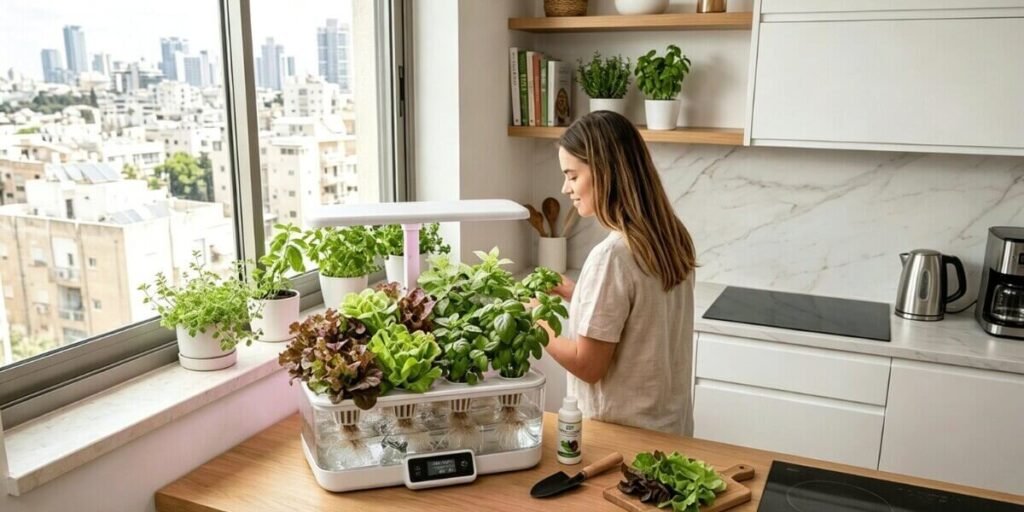
If you are new to hydroponics and only have a small space, a desktop hydroponic garden is a great place to start. You do not need a large room or a complicated setup. A small system on your kitchen counter, balcony, or a sunny corner can be enough to grow fresh herbs and greens at home.
Many beginners start with plants like basil, mint, and lettuce because they are forgiving and easy to grow. Watching a small seedling develop into something you can harvest is one of the most enjoyable parts of hydroponic gardening. Along the way, you will naturally learn how plants react to different water levels, nutrients, and lighting conditions.
Vertical Hydroponic Tower for Growing More at Home
If you want to grow more plants but do not have much space, a vertical hydroponic tower is a great option to consider. Instead of spreading plants across the floor, these systems allow you to grow upward, making better use of small spaces like balconies, patios, or apartment corners.
Many home growers choose vertical towers because they can grow a surprising number of plants in a compact area. You can enjoy fresh herbs, leafy greens, and vegetables at home without needing a large backyard or complicated garden setup.
At Greenfuture Hydro, we create vertical hydroponic towers for families and home growers who want a simple way to grow more at home. Our goal is to make hydroponic gardening more accessible, whether you are starting your first garden or looking to expand your growing space.
NFT Hydroponic System for Larger Home Harvests
If you have already tried a small hydroponic system and want to grow more plants, an NFT (Nutrient Film Technique) system can be a great next step. It creates a more organized growing space and is especially suitable for leafy greens like lettuce, spinach, and herbs.
NFT systems are a good choice for advanced beginners who want a larger harvest at home. While they need a little more attention than a desktop garden, they can help you expand your growing experience and enjoy more fresh produce.
The best hydroponic system depends on your space, goals, and experience level. Choosing a setup that fits your lifestyle will make growing easier and more enjoyable.
How to Prepare Your Home for Hydroponic Growing
Before starting your home hydroponic garden, take a little time to find the right spot. You do not need a big room or a backyard to grow plants successfully. Many beginner friendly systems can fit easily in apartments, kitchens, balconies, or small indoor corners. The most important thing is choosing a place where you can easily check your plants and take care of them regularly.
A good growing space should have enough light or enough room for LED grow lights, a nearby power outlet for pumps and timers, and convenient access to water. Try to avoid places that are too hot, too cold, or exposed to sudden temperature changes. A comfortable and stable environment will make plant care much easier, especially when you are just starting out.
Easy Plants to Grow in Your First Hydroponic Garden
One of the most exciting parts of starting a home hydroponic garden is choosing what to grow first. Seeing your first seeds sprout, watching roots develop, and harvesting fresh vegetables from your indoor garden can be a rewarding experience.
If you are new to hydroponics, choosing the right plants can make the process much easier. Some crops grow faster and adapt better to hydroponic systems. They are also more forgiving while you learn how to manage water, nutrients, and lighting.
For most beginners, leafy greens and herbs are the best place to start. They need less space, grow well in indoor systems, and many varieties can be harvested again and again.
Lettuce: One of the Easiest Crops to Start
Lettuce is one of the most popular beginner plants for hydroponic gardening, and there is a good reason for that. It grows quickly, works well in compact systems, and does not require advanced growing skills.
Many first time growers choose lettuce because it provides fast results. With the right light and nutrients, you can enjoy fresh leaves from your own hydroponic garden instead of buying packaged greens.
Lettuce grows especially well in vertical hydroponic towers and NFT systems. This makes it a great choice for apartments, kitchens, and other indoor growing spaces.
Basil: A Fast Growing Herb for Home Growing
Fresh basil is one of those plants that makes a home hydroponic garden feel truly rewarding. Instead of buying small containers of herbs that lose freshness quickly, you can harvest what you need whenever you cook.
Basil grows well in hydroponic systems and responds to consistent light and nutrients. It is also beginner friendly because regular trimming encourages new growth.
For anyone who enjoys homemade pasta, salads, or fresh recipes, basil is one of the most satisfying herbs to grow at home.
Mint: A Low Maintenance Herb for Beginners
Mint is another excellent choice for beginner hydroponic growers. It is naturally a fast growing herb and can adapt well to water based growing systems.
Many people enjoy growing mint because it has so many everyday uses. Fresh mint leaves can be added to drinks, desserts, teas, and homemade recipes.
Because mint grows quickly, it is a good idea to give it enough space in your hydroponic system or grow it separately from slower growing plants.
Spinach and Kale: Great Options for Leafy Greens
If you want to grow more nutritious leafy greens at home, spinach and kale are great choices to try.
Both plants can grow well in hydroponic environments with proper temperature, lighting, and nutrients. They are popular among growers who want fresh greens for smoothies, salads, and healthy meals.
Spinach and kale may need a little more care than lettuce. However, they are still beginner friendly crops once you understand the basics of hydroponic growing.
Start Simple and Build Your Growing Skills
The best beginner plants for a home hydroponic garden are those that help you learn and enjoy the growing process. Starting with lettuce, herbs, and leafy greens allows you to understand how plants respond to water, nutrients, and grow lights.
Once you feel comfortable managing your system, you can explore more challenging crops like tomatoes, peppers, cucumbers, and strawberries.
Every successful hydroponic grower starts with simple steps. A few easy plants can help you build confidence and create an indoor garden that provides fresh food throughout the year.
Want to explore more growing ideas? Check out our guide: What Can You Grow in Hydroponics?
How to Start Your First Hydroponic Garden Step by Step
Starting a hydroponic garden at home does not have to be complicated. You only need a suitable growing space, the right hydroponic system, and some basic plant care knowledge.
For beginners, the most important thing is not buying the most advanced equipment. It is learning how to provide the right environment for your plants, including proper water, nutrients, and light.
Follow these simple steps to begin your hydroponic growing journey.
1. Choose a System That Fits Your Space
Choosing your first hydroponic system does not have to be difficult. The best system is not always the biggest or most expensive one. It should match your available space, the plants you want to grow, and how much time you can spend on care.
If you have a small space, a countertop hydroponic system is a good option for growing herbs and leafy greens. If you want to grow more vegetables, a vertical tower or NFT system can help you make better use of your space.
For beginners, a simple and easy to maintain system is usually the best choice. It allows you to learn the basics and enjoy the growing process.
2. Set Up Your Garden Before Adding Plants
Before adding plants, make sure your hydroponic system is ready. Clean the water tank and growing areas, check that the pump works properly, and make sure water can flow smoothly. A clean and well prepared system helps prevent problems and gives your plants a better start.
If you are growing indoors, set up your grow lights carefully to provide enough light for your plants. Taking a little extra time to prepare your system before planting can make your first hydroponic growing experience easier and more enjoyable.
3. Understand the Basics of Water and Nutrients
One of the biggest differences between soil gardening and hydroponics is managing water and nutrients. Since plants grow without soil, they get the minerals they need from the nutrient solution. Keeping the water conditions balanced is important, but beginners can learn it step by step.
Two basic things to understand are pH and EC. pH helps you know if the water is suitable for plants to absorb nutrients. EC shows how much nutrients are in the water. Checking these levels regularly helps you provide a better growing environment.
As you gain more experience, managing nutrients will become easier. Pay attention to your plants and make small adjustments when needed to help them grow better.
4. Start With Easy to Grow Plants
Your first harvest should be simple and enjoyable. When starting a hydroponic garden, choose plants that are easy to grow and can adapt to small mistakes while you learn.
Leafy greens and herbs are great choices for beginners. Plants like lettuce, basil, mint, spinach, and kale grow well in many home hydroponic systems and help you learn the basics of light, water, and nutrients.
After you gain more experience, you can try other crops like tomatoes, peppers, cucumbers, and strawberries. Growing different plants will help you learn more and improve your hydroponic skills.
5. Observe Your Plants and Make Adjustments
Hydroponic gardening does not require constant adjustments. A simple daily check can help you understand how your plants are growing. Look at the leaves, roots, water level, and overall plant condition.
Healthy plants usually have strong growth, green leaves, and healthy roots. If something is wrong, plants often show signs early. Learning to notice these changes will help you take better care of your hydroponic garden.
6. Harvest, Replant, and Keep Learning
Your first harvest is an exciting moment in your hydroponic journey. Seeing your plants grow and enjoying fresh herbs or vegetables from your own garden is a rewarding experience.
But learning does not stop after your first harvest. Each growing cycle helps you understand your plants better and improve your system. You can try different crops, adjust your lighting, and find what works best for your space.
A successful hydroponic garden does not need to be perfect from the beginning. It is about learning step by step and enjoying the process of growing fresh food at home.
Common Beginner Mistakes to Avoid When Growing Hydroponically
Starting a home hydroponic garden is exciting, but it takes some time to learn. Many beginners focus on buying equipment and forget the simple steps that help plants grow well.
The good news is that most beginner mistakes are easy to avoid. By choosing the right system, starting with easy plants, and caring for your garden regularly, you can enjoy a better hydroponic growing experience.
1: Starting With a System That Is Too Complicated
One common mistake beginners make is choosing a hydroponic system that is too advanced. A system with too many features may look attractive, but it can make growing more difficult when you are still learning.
For beginners, a simple and easy to use system is usually a better choice. It helps you focus on the basics, such as keeping roots healthy, managing nutrients, and building a regular care routine. Starting with a small system can help you gain experience and feel more confident as you grow.
2: Choosing Difficult Plants Too Early
Many beginners want to grow plants like tomatoes, peppers, or strawberries right away. However, these crops usually need more care, including proper lighting, nutrients, and longer growing time.
For your first hydroponic garden, leafy greens and herbs are often better choices. Plants like lettuce, basil, and mint grow faster and are easier to manage. They help you learn how your system works and build confidence before trying more challenging crops.
3: Ignoring Water and Nutrient Management
In hydroponics, plants get all the nutrients they need from water instead of soil. This means keeping the water quality, nutrient levels, and pH balanced is important for healthy growth.
Many beginners focus on choosing the right system but forget about regular care. Simple habits, such as checking water levels, looking at plant growth, and testing nutrients from time to time, can help you find problems early and keep your plants healthy.
4: Placing Your Garden in the Wrong Location
The location of your hydroponic system can affect how well your plants grow. A place with poor lighting, unstable temperatures, or difficult access to water and power can make plant care harder.
Before setting up your garden, choose a convenient location with enough light and easy access for daily checks. A good setup area helps your plants grow better and makes caring for your garden much easier.
5: Expecting Perfect Results From Your First Harvest
Many beginners hope their first hydroponic harvest will be perfect, but growing plants takes time and practice. Even experienced growers continue to make small adjustments to improve their results.
Your first growing cycle is a chance to learn what works best for your plants. You may need to adjust your lighting, try different crops, or change your nutrient routine. The most important thing is to keep learning and improve your hydroponic garden step by step.
Hydroponic Garden Cost: What Beginners Should Expect
The cost of starting a home hydroponic garden depends on what you want to grow, how much space you have, and how much automation you prefer. The good news is that you do not need a large investment to begin.
Many beginners start with a simple countertop system or a small vertical hydroponic garden to learn the basics. As you gain more experience, you can gradually expand your setup with larger systems, additional lighting, or more advanced growing features.
For most home growers, a practical hydroponic setup can start from around $30 to $100, while larger systems with more growing space may cost more.
Starting Small: Beginner-Friendly Hydroponic Setups
Around $30 to $50
If you are just getting started with hydroponics, a small system is often the easiest way to see if indoor growing is right for you. These compact gardens work well for apartments, kitchens, and other small spaces where you want to grow a few fresh herbs or salad greens without setting up a large garden.
A desktop hydroponic garden is a great choice for plants like basil, mint, lettuce, and spinach. It gives beginners a chance to experience the basics of hydroponic growing, from adding nutrients to watching roots develop and harvesting fresh greens at home.
Greenfuture Hydro’s compact hydroponic systems are designed for everyday home growers who want a simple way to start growing indoors. They are a practical first step for anyone who wants to enjoy fresh plants at home before exploring larger hydroponic systems.
Mid-Size Systems for Home Growers
Around $40 to $100
Once you become more interested in hydroponics and want to grow more than a few herbs, a larger home system can give you much more growing space without taking over your home. Vertical hydroponic towers are especially popular among home growers because they make use of vertical space and work well in apartments, balconies, patios, and indoor growing areas.
A vertical tower is a great option for growing crops such as lettuce, leafy greens, herbs, and even some fruiting plants like strawberries. Instead of spreading plants across a large garden area, you can grow multiple plants in a compact footprint and enjoy a more regular supply of fresh produce.
Greenfuture Hydro’s home hydroponic towers are designed for growers who want to expand from a small starter garden to a more productive home setup. The vertical design makes it easier to grow more plants while keeping maintenance simple, making it a practical choice for everyday indoor and outdoor gardening.
Larger Systems for More Growing Space
$150 and above
As your interest in hydroponics grows, you may find yourself wanting more space, more variety, and a larger harvest. A bigger system can give you the flexibility to grow more plants at the same time and experiment with crops that need extra room.
Larger hydroponic setups are a good fit for families who want a more consistent supply of fresh vegetables, as well as growers who enjoy trying different crops throughout the year. Options such as larger vertical towers, NFT systems, and additional grow lighting can help create a more productive growing environment.
For many beginners, upgrading does not happen all at once. It is often a gradual process of adding more growing space, trying new plants, and improving your setup as you gain more experience.
How Much Maintenance Does Hydroponic Gardening Require?
One common question beginners have is whether hydroponic gardening requires a lot of daily work. The good news is that most home hydroponic systems do not need constant attention. A few simple checks throughout the week can help you keep plants healthy and catch potential problems early.
The exact maintenance schedule depends on your system, plants, and growing environment, but a simple routine is usually enough for most home growers.
| Maintenance Schedule | What to Check | Why It Matters |
|---|---|---|
| Daily | Check plant health and water level | Look for changes in leaf color, growth, or water levels to catch problems early |
| Weekly | Monitor nutrient levels and pH | Helps plants absorb nutrients properly and maintain steady growth |
| Monthly | Clean the system and refresh water if needed | Prevents buildup and keeps the growing environment healthy |
Regular observation is one of the most important parts of hydroponic gardening. You do not need to make constant adjustments. Instead, pay attention to how your plants respond and make small changes when needed.
With a simple maintenance routine, beginners can keep their hydroponic garden running smoothly and enjoy more consistent harvests over time.
Why Greenfuture Hydro Helps Beginners Grow With Confidence
Choosing your first hydroponic system is about finding a setup that fits your space, plants, and growing goals. With guidance from an experienced hydroponic team, beginners can choose a system that is easier to manage and more suitable for their needs.
Greenfuture Hydro has been designing and manufacturing hydroponic systems since 2015, helping home growers, schools, and agricultural projects create practical growing solutions. From vertical hydroponic towers and NFT systems to Dutch Bucket setups and customized projects, we design systems based on real growing environments and customer needs.
Real Case Study: A Mini 30 Hole Hydroponic Tower Project for a School in Iraq
In December 2024, Greenfuture Hydro worked with a school in Iraq to provide Mini 30 Hole Hydroponic Tower systems for a student learning project. The goal was simple: help students experience how modern farming works and learn how plants can grow without soil.
Before starting production, our team spent several weeks communicating with the school to understand their needs, including the growing space, project purpose, and system requirements. After everything was confirmed, we produced the hydroponic towers, prepared the packaging and instructions, and arranged shipment from our factory in Zhongshan, Guangdong, China through Guangzhou Nansha Port.
After receiving the systems, students used the hydroponic towers to grow lettuce and learn about plant growth, nutrient solutions, and water circulation. The project gave students a practical way to explore agriculture while seeing the complete growing process from planting to harvesting.
Frequently Asked Questions About Hydroponic Gardening
Yes. Beginners can start hydroponics with simple systems for herbs and leafy greens. A small setup helps new growers learn basic skills like managing water, nutrients, lighting, and plant care without feeling overwhelmed.
Yes. Hydroponics is suitable for apartments, balconies, and small indoor spaces. Desktop systems work well for herbs, while vertical hydroponic systems help grow more plants by using vertical space.
For many home growers, yes. Hydroponics makes it easier to enjoy fresh herbs and leafy greens year round, especially crops like lettuce, basil, and spinach that grow quickly in controlled conditions.
Beginners often focus too much on equipment and overlook plant needs. Start with easy crops, maintain proper nutrients and water conditions, and learn how your plants respond over time.
Most home hydroponic gardens only need a few minutes of daily attention. Regular checks of water levels, plant health, and system conditions are usually enough to keep plants growing well.
Key Takeaways: Starting Your First Hydroponic Garden
Starting your first home hydroponic garden can be much easier than you might expect. You do not need a backyard, years of gardening experience, or a complicated setup to begin growing fresh herbs and vegetables at home. The best way to get started is to choose a system that fits your space, begin with easy crops like lettuce and herbs, and learn the basics of water, nutrients, and plant care along the way.
Hydroponic gardening is a journey of learning and experimenting. Each harvest helps you understand your plants better and improve your growing routine. Start small, enjoy the process, and give yourself time to discover what works best for your home garden.
Ready to Start Your Hydroponic Growing Journey?
Growing your own fresh herbs and vegetables at home is an exciting journey, and the right hydroponic setup can make getting started much easier. At Greenfuture Hydro, we design and manufacture hydroponic systems for home growers, schools, and farms around the world, helping people create practical growing spaces for different needs.
Whether you are setting up a small indoor garden on your kitchen counter, growing more with a vertical hydroponic tower, or planning a larger hydroponic project, we can help you find a system that fits your space and growing goals.
Tell us what you would like to grow and where you plan to grow it, and our team will help you choose a hydroponic solution that works for you.
📩 info@greenfuturehydro.com
📞 +86 13487543942
📷 Instagram @Greenfuturehydro